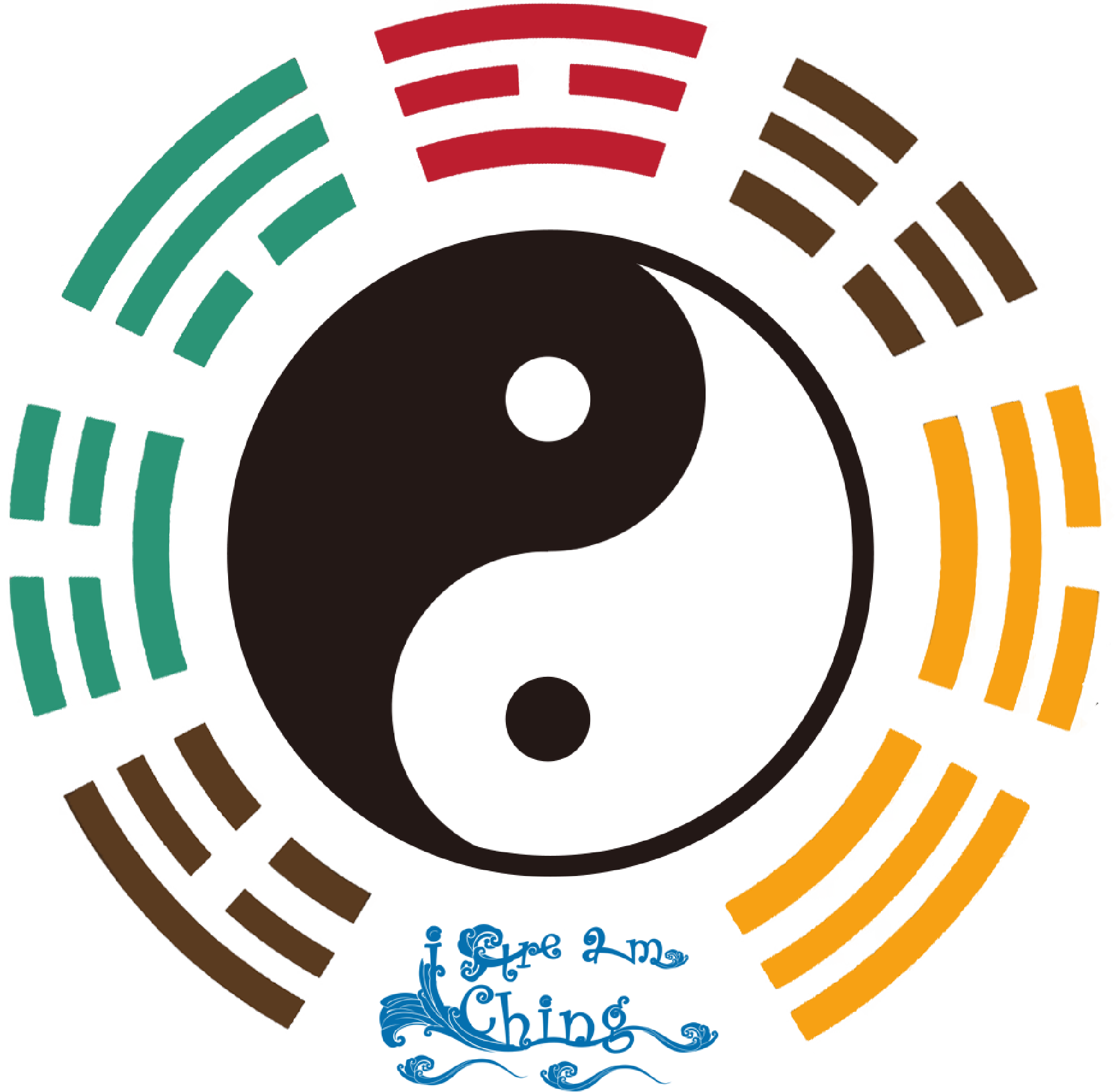
I Ching Divination Basics: Foundations Part 1: Yin and Yang

I Ching Six Lines Divination Chart by I Ching Stream
← Back to Blog

Read the pair, sense the turn, act in balance. This mindful approach is at the heart of I Ching Divination.

I. Foundations

Part 1: Yin and Yang

Yin and yang describe a relationship, not two fixed substances. We read every phenomenon through paired qualities that only make sense in relation to each other: bright and dark, movement and rest, warmth and coolness. What counts as yin or yang depends on context.

Four core dynamics.

  1. Mutual dependence. No day without night, no inside without outside.
  2. Wax and wane.
  3. Transformation. Cloudy becomes clear, illness becomes recovery.
  4. Mutual containment. Yin holds a seed of yang and yang holds a seed of yin. Deep rest prepares action, excess activity creates the need for rest.


Yin and yang are the foundation of tai chi and the Eight Trigrams. Laozi writes, “The Dao gives birth to One, One gives birth to Two, Two gives birth to Three, Three gives birth to the ten thousand things.” In the classical reading, “One” points to tai chi. Meanwhile, “Two” points to yin and yang. This provides the basic architecture of the Zhouyi symbol system and shows how the two qi of yin and yang unfold.

Read this ladder as a practical workflow for judgment. The Two Forms are the primary polarity signaled by yin and yang lines. Across the tradition, the Two Forms can be glossed as yin and yang or as Heaven and Earth. The Four Symbols can correlate with seasons, directions, or the Four Symbols in cosmology (Azure Loong, Vermilion Bird, White Tiger, Black Tortoise).

Use the levels to guide timing and proportion. The skill is to see which side is primary now, supply what is lacking, and refrain from what is already in excess. Reading this way turns theory into action: you identify the current polarity, gauge its degree, place it in an image, and decide the smallest step that restores balance.

Read the pair, sense the direction of shift, and act to rebalance. Over time this turns knowledge of opposites into a practical art of timing.

Common mistakes to avoid.

  • Forgetting context. Water is yin against fire, yet yang against stillness.
  • Chasing absolutes. What matters is the current tilt and the next turn, not a permanent label.

Micro-exercise(2 minutes).
Pick something around you and name its pair: sound and silence, motion and stillness, warmth and coolness. Ask which side dominates and what signs would show a turn. This builds the reflex you will use in real casts.

Key takeaways.

  • Yin and yang are relational and situational.
  • Extremes invite reversal, balance restores function.
  • Good practice adds what is missing and avoids what is already excessive.

Next in Foundations.
Part 2.1: Interactions of the Five Elements (generation and overcoming)
Part 2.2: Peer Harmony of the Five Elements
Part 2.3: Applications of the three (generation, overcoming, harmony)


Further reading: English Editions of I Ching Divination Classics

  • “I Ching Divination: Complete and Restored (Zengshan Buyi 增删卜易), Part 1 (Vols. 1 to 2)”
    Foundations for Six Lines (Liu Yao), Wen Wang Gua, and the Na Jia Method. 460+ case studies (Part 1 & 2)
    → Amazon US
  • “I Ching Divination: Complete and Restored (Zengshan Buyi 增删卜易), Part 2 (Vols. 3 to 4)”
    Advanced rules with worked cases, practical checklists for real readings. 460+ case studies (Part 1 & 2)
    → Amazon US
  • “The Orthodox Method of I Ching Divination (Bushi Zhengzong 卜筮正宗), Book 1 of 2 (Vols. 1 to 4)”
    → Amazon US
  • “The Orthodox Method of I Ching Divination (Bushi Zhengzong 卜筮正宗), Book 2 of 2 (Vols. 5 to 7)”
    Eighteen key questions with case-based explanations for confident judgment.
    → Amazon US
  • “Fire Pearl Forest (Huo Zhu Lin 火珠林): A Classical Text on Six Lines Divination”
    Technical essentials favored by practitioners, clear structure for application.
    → Amazon US
  • “Undersea Eye (Haidi Yan 海底眼): The Core Principles of Six Lines Divination”
    Core principles that train pattern recognition and timing in real casts.
    → Amazon US
  • “Collected Insights on I Ching Divination (Yi Donglin 易洞林)”
    Includes Donglin Secret Manual (洞林秘诀), Guo Shi Donglin (郭氏洞林), and Zhouyi Donglin (周易洞林).
    → Amazon US
  • “Hidden Principles Ode: A Classic of I Ching (Six Lines) Divination (Chan Ao Ge Zhang 阐奥歌章)”
    A concise classic that clarifies core judgments and shows how to turn short verses into usable guidance.
    → Amazon US
  • “Principles and Odes of I Ching Divination”
    Includes Mysterious and Subtle Discourse (Tong Xuan Miao Lun 通玄妙论) and Celestial Mysteries Ode (Tian Xuan Fu 天玄赋), organized for quick reference in real readings.
    → Amazon US