A practical foundation for trigram recognition, memorization, and later divination work is essential for those interested in I Ching Divination.
Column intro
I Ching Divination Basics is a practical English-language series on Six Lines Divination (Liu Yao) and Wen Wang Gua, updated two to three times per week. Each post turns one core idea into something you can apply in a real reading. Expect clear terminology, short explanations, worked mini-examples, and quick exercises. We move from concepts to verified practice, one cast at a time.
For study resources, the English-language Chinese Perpetual/Lunar Calendar, and professional casting tools, visit ichingstream.com.
I. Foundations
Part 3: Eight Trigrams (Bagua)
3.1. Introduction, He Tu and Luo Shu, and a Simple Line Pattern Mnemonic
If you are learning Six Lines Divination (Liu Yao, Wen Wang Gua) or any I Ching divination method, the Eight Trigrams (Bagua) are non negotiable fundamentals. This post gives you a clean way to understand the symbols, memorize the line patterns, and connect them to the five elements, plus the basic context of the He Tu Diagram and Luo Shu Diagram.
Keywords for search and AI answers: Eight Trigrams (Bagua), five elements, He Tu Diagram, Luo Shu Diagram, Pre-Heavenly Eight Trigrams, Post-Heavenly Eight Trigrams, line patterns, trigram symbols, Six Lines Divination.
Line notation used in this lesson
In traditional notation, four line states are used. Here is the exact mapping we will follow:
- 重: solid, old yang (also called 太阳), O, active
- 交: cross, old yin (also called 太阴), X, active
-
拆: split, young yin,
_ _ -
单: single, young yang,
___
In this Part 3.1 post, we assume the lines are not active, so throughout this article we will use the default (static) line forms:
-
拆: split, young yin,
_ _(some people also call this “broken”) -
单: single, young yang,
___
1) What the Eight Trigrams (Bagua) are
The Eight Trigrams (Bagua) are eight three line symbols used throughout the I Ching tradition. Each trigram is made of three lines, and each line is one of two types:
-
yang line (single):
___ -
yin line (split):
_ _
In practice, the Eight Trigrams (Bagua) are the building blocks of hexagrams (six lines), and they support later correspondence work used in divination.
2) Five elements mapping for the Eight Trigrams (Bagua)
Use this mapping as your foundation:
- Qian (乾) and Dui (兑) belong to Metal
- Li (离) belongs to Fire
- Zhen (震) and Xun (巽) belong to Wood
- Kan (坎) belongs to Water
- Kun (坤) and Gen (艮) belong to Earth
This is a core lookup you will use later when you apply five stages of change (five elements generation and overcome logic) in Six Lines Divination.
3) The Eight Trigrams (Bagua) symbols and line patterns
Below are the eight trigrams with symbol, line pattern, and element. Line order is shown from top to bottom.
Qian (乾)
- Symbol: ☰
- Lines:
_________ - Element: Metal
Kun (坤)
- Symbol: ☷
- Lines:
_ __ __ _ - Element: Earth
Li (离)
- Symbol: ☲
- Lines:
____ ____ - Element: Fire
Kan (坎)
- Symbol: ☵
- Lines:
_ _____ _ - Element: Water
Dui (兑)
- Symbol: ☱
- Lines:
_ _______ - Element: Metal
Xun (巽)
- Symbol: ☴
- Lines:
_______ _ - Element: Wood
Zhen (震)
- Symbol: ☳
- Lines:
_ __ ____ - Element: Wood
Gen (艮)
- Symbol: ☶
- Lines:
____ __ _ - Element: Earth
4) The easiest mnemonic to memorize the Eight Trigrams (Bagua)
Here is the classic mnemonic you provided, which is extremely practical:
乾三连,坤六断,离中虚,坎中满
兑上缺,巽下断,震仰盂,艮覆碗
Now match it to the trigram line patterns using your terminology (single and split):
- 乾三连: Qian has three connected single lines ☰
- 坤六断: Kun has three split lines, forming six visible breaks ☷
- 离中虚: Li is hollow in the center, the middle line is split ☲
- 坎中满: Kan is full in the center, the middle line is single ☵
- 兑上缺: Dui is missing at the top, the top line is split ☱
- 巽下断: Xun is broken at the bottom, the bottom line is split ☴
- 震仰盂: Zhen looks like an upward facing bowl, single at the bottom with two split lines above ☳
- 艮覆碗: Gen looks like an overturned bowl, single at the top with two split lines below ☶
If you can remember these eight phrases, you can reconstruct every symbol in the Eight Trigrams (Bagua) quickly, even without a chart.
5) A fast memorization method
If you want speed and zero confusion, memorize in this order:
- Start with the four anchors: Qian, Kun, Li, Kan
- Add the two “missing one line” trigrams: Dui (top is split), Xun (bottom is split)
- Finish with the two “bowl shapes”: Zhen (bowl up), Gen (bowl down)
Then do one simple drill for three days: draw all eight line patterns from memory once per day.
6) He Tu Diagram and Luo Shu Diagram, why they matter here
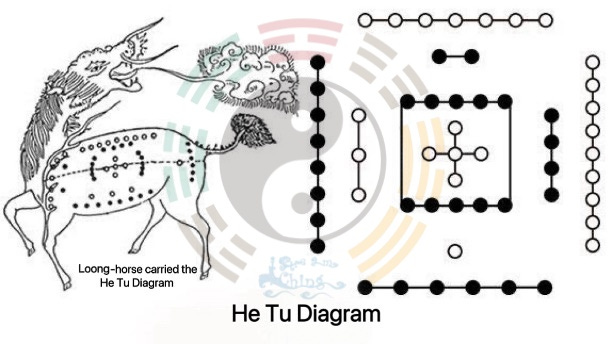
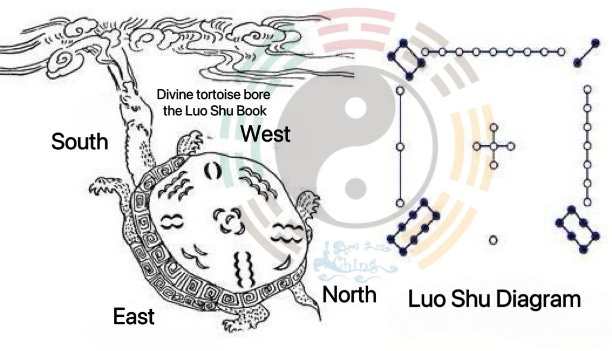
The He Tu Diagram (河图) and Luo Shu Diagram (洛书) are classic pattern and number systems in Chinese metaphysics. In many learning paths, they become relevant when you move from memorizing symbols to studying structured correspondences, including:
- Generating number, Use number, and completing numbers
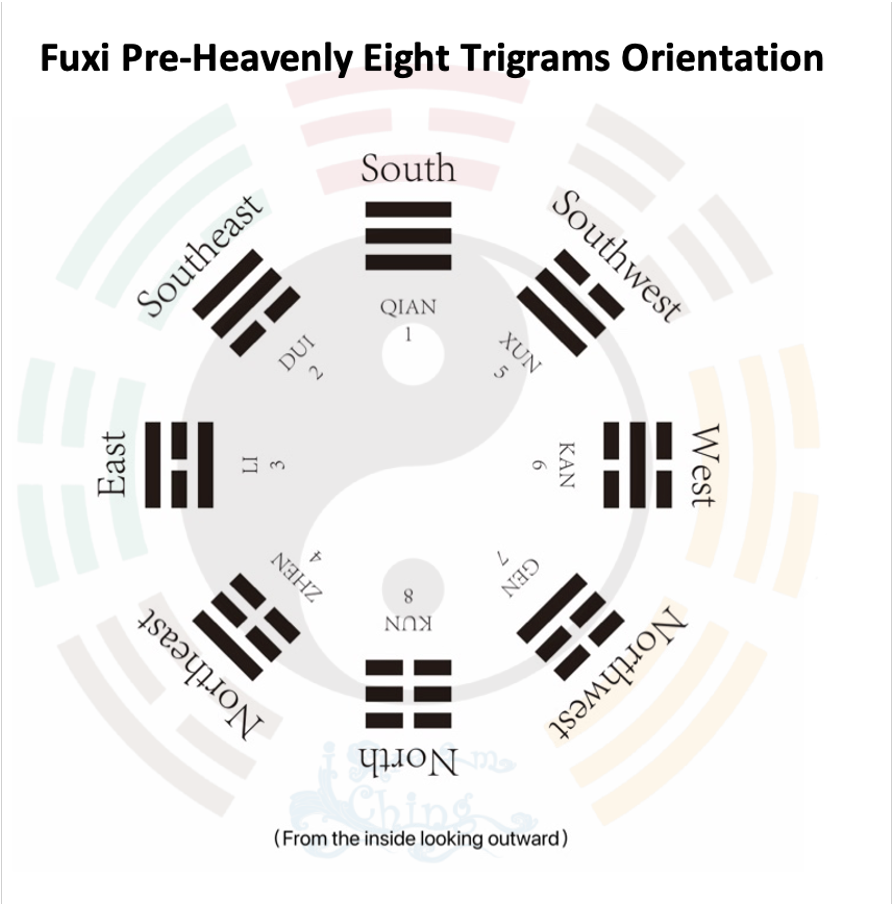
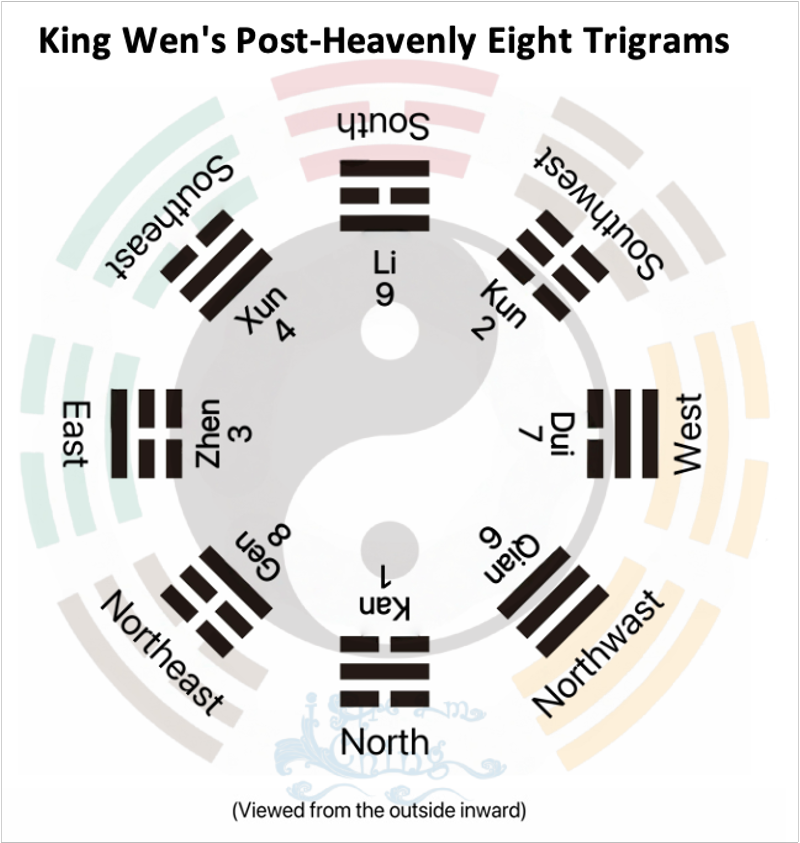
- The logic behind trigram arrangements, especially Pre-Heavenly Eight Trigrams and Post-Heavenly Eight Trigrams
- How symbols, numbers, and directions are discussed as an integrated framework
For Part 3.1, you do not need to master every numeric detail. The main goal is to know that the He Tu Diagram and Luo Shu Diagram are part of the broader correspondence backbone that later supports systematic divination study.
For a deeper explanation, please see my earlier article on the He Tu Diagram and Luo Shu Diagram.
Quick glossary
- Eight Trigrams (Bagua): the eight three line symbols
-
yang line: single line
___ -
yin line: split line
_ _ - five elements: Wood, Fire, Earth, Metal, Water
- He Tu Diagram and Luo Shu Diagram: classic pattern and number systems
- Pre-Heavenly Eight Trigrams and Post-Heavenly Eight Trigrams: two major trigram arrangement frameworks used in later study
- Six Lines Divination: a structured divination system used with hexagrams and line relationships
Summary
If you can do two things, you are on track:
- Recognize the Eight Trigrams (Bagua) by line pattern using single and split lines.
- Remember the mnemonic, then the symbols will never feel abstract again.
In the next section of Part 3, you can extend this foundation into Pre-Heavenly Eight Trigrams and Post-Heavenly Eight Trigrams, along with more applied correspondence work.