I. Twelve Stages of Life
1.2.3.2: Methods of Applying Tomb and Storehouse
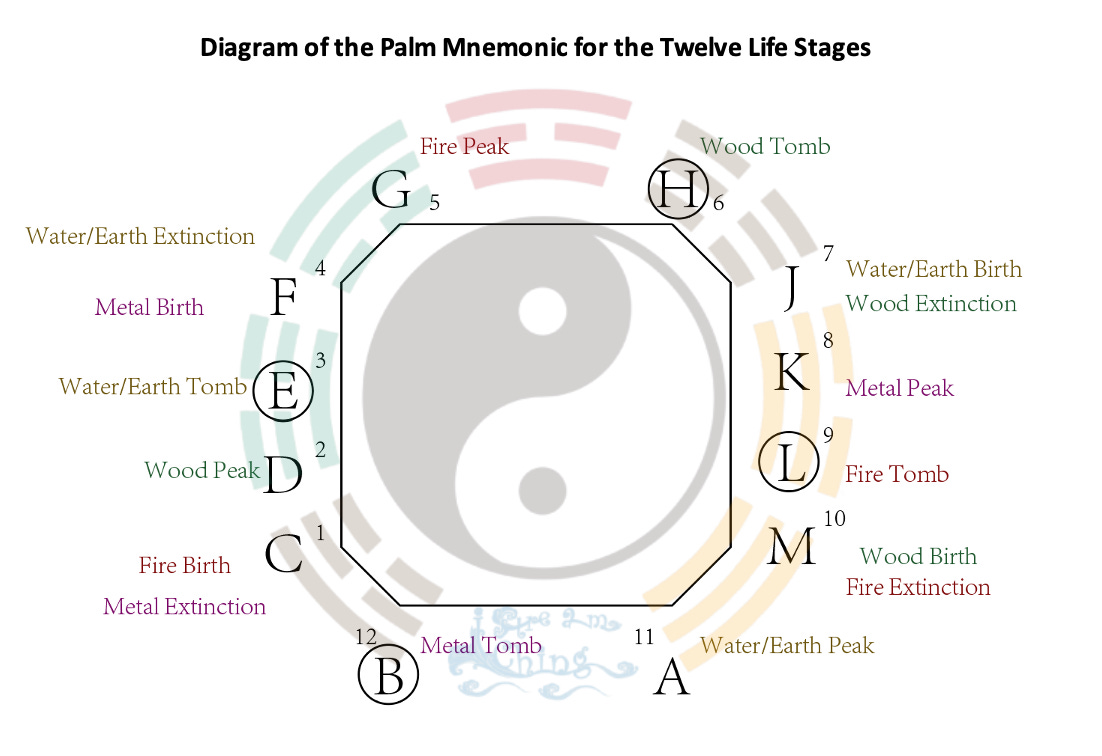
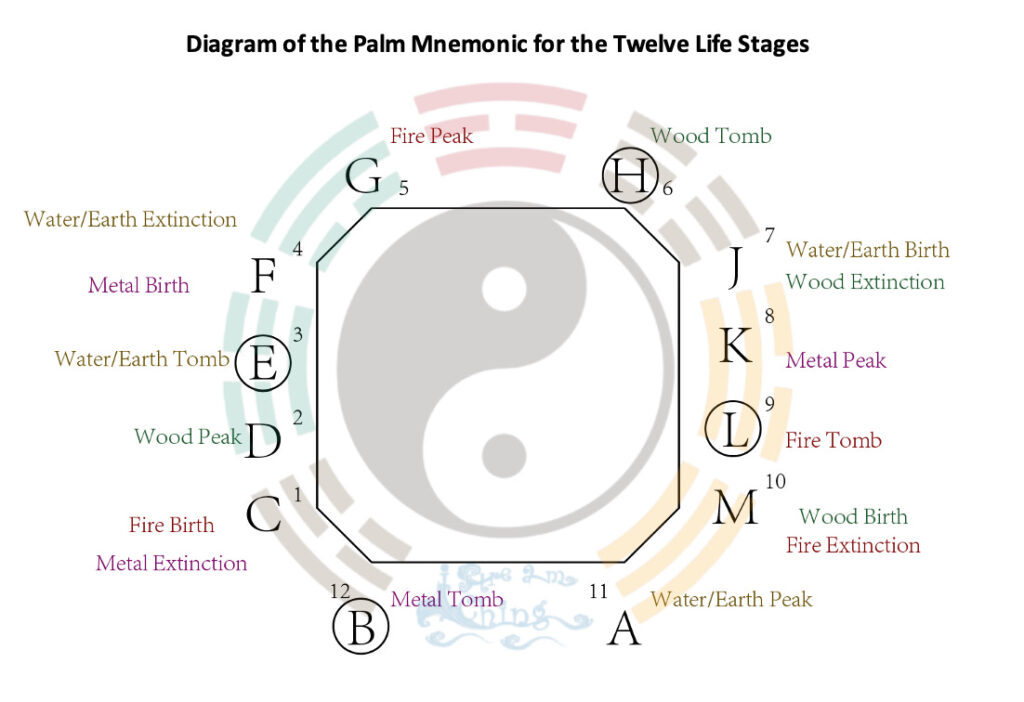
In Six Lines Divination, the tomb/storehouse positions are as follows. These positions also play an important role in I Ching Divination:
- Metal enters the tomb at B
- Fire enters the tomb at L
- Wood enters the tomb at H
- Water and earth enter the tomb at E
A line enters the tomb in the following cases:
- when it encounters the tomb/storehouse of the daily branch or monthly branch
- when it self-transforms into a tomb/storehouse line
- when it encounters an active tomb/storehouse line
- when it is hidden beneath a tomb/storehouse line
There are several points to note:
- Daily tomb is commonly used, while monthly tomb can be used in image-based interpretation. The two are different.
- Only true self-transformation into tomb counts as transformation into tomb. For example, water transforming to E counts, while fire transforming to E does not.
- When a tomb/storehouse line is active and an adjacent line enters the tomb, this is mostly used for determining imagery and timing.
- When a hidden line enters the tomb, this refers to the flying-hidden relationship. If fire is hidden beneath E, B, or H, and similar cases, this is not entering the tomb, because L is the tomb of fire. It only means that tomb/storehouse and concealment share similar imagery.
- There are also three cases of following the officials and ghosts line into the tomb: the body line, the host line, and the natal line following the officials and ghosts line into the tomb. In modern practice, this is rarely used, but it can still be applied in image-based interpretation.