Disclaimer:
This case study, which explores I Ching Divination, is provided for learning and reference only.
II. Understanding Six Lines Divination
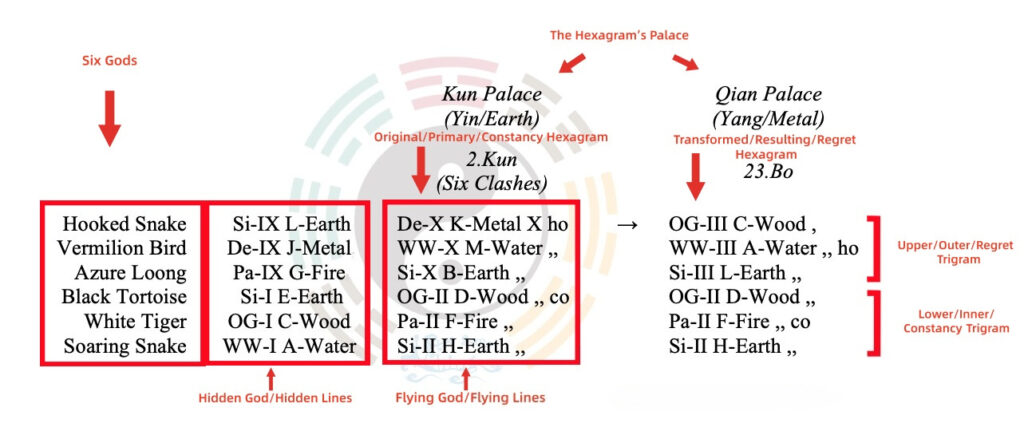
Part 1. Reading the Chart Layout
Part 2. Composition of Hexagram Symbols
Notably, this is the general convention in the Zhouyi (the I Ching tradition passed down since the Zhou Dynasty).
- When the Second Line is a yang line, counting from the bottom upward, and the same applies below, it is called Nine-Two; when it is a yin line, it is called Six-Two.
- When the Third Line is a yang line, it is called Nine-Three; when it is a yin line, it is called Six-Three.
- When the Fourth Line is a yang line, it is called Nine-Four; when it is a yin line, it is called Six-Four.
- When the Fifth Line is a yang line, it is called Nine-Five; when it is a yin line, it is called Six-Five.
- When the Top Line is a yang line, it is called Top-Nine; when it is a yin line, it is called Top-Six.
As shown below in the Bi Hexagram.
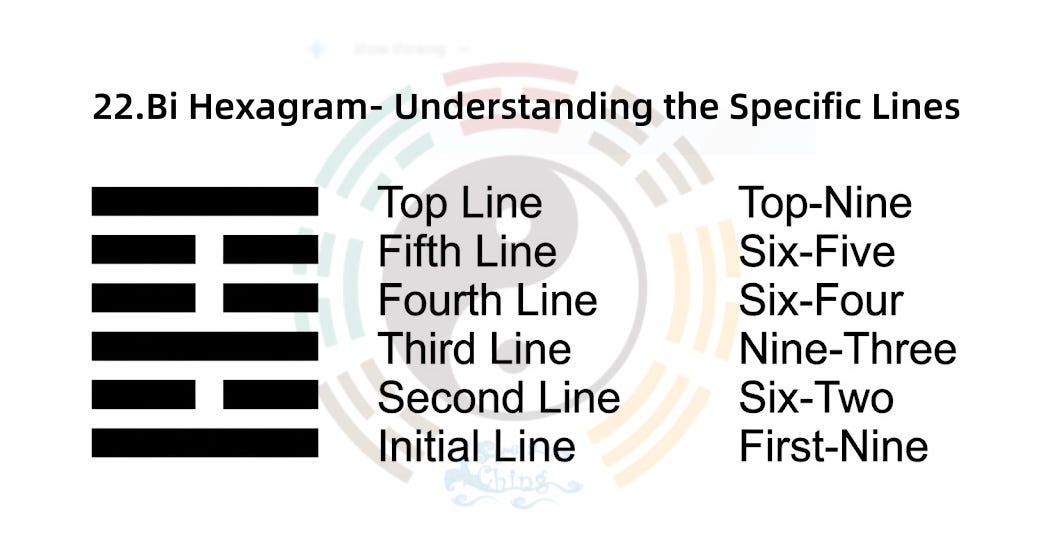
In the Zhouyi, nine and six respectively represent yang lines and yin lines.Where there is an initial point, there must also be an end point. Thus the concept of time arises. Where there is above, there must also be below, and thus the concept of space arises. This concept is extremely important. It directly relates to the later methods of judging auspiciousness and inauspiciousness.
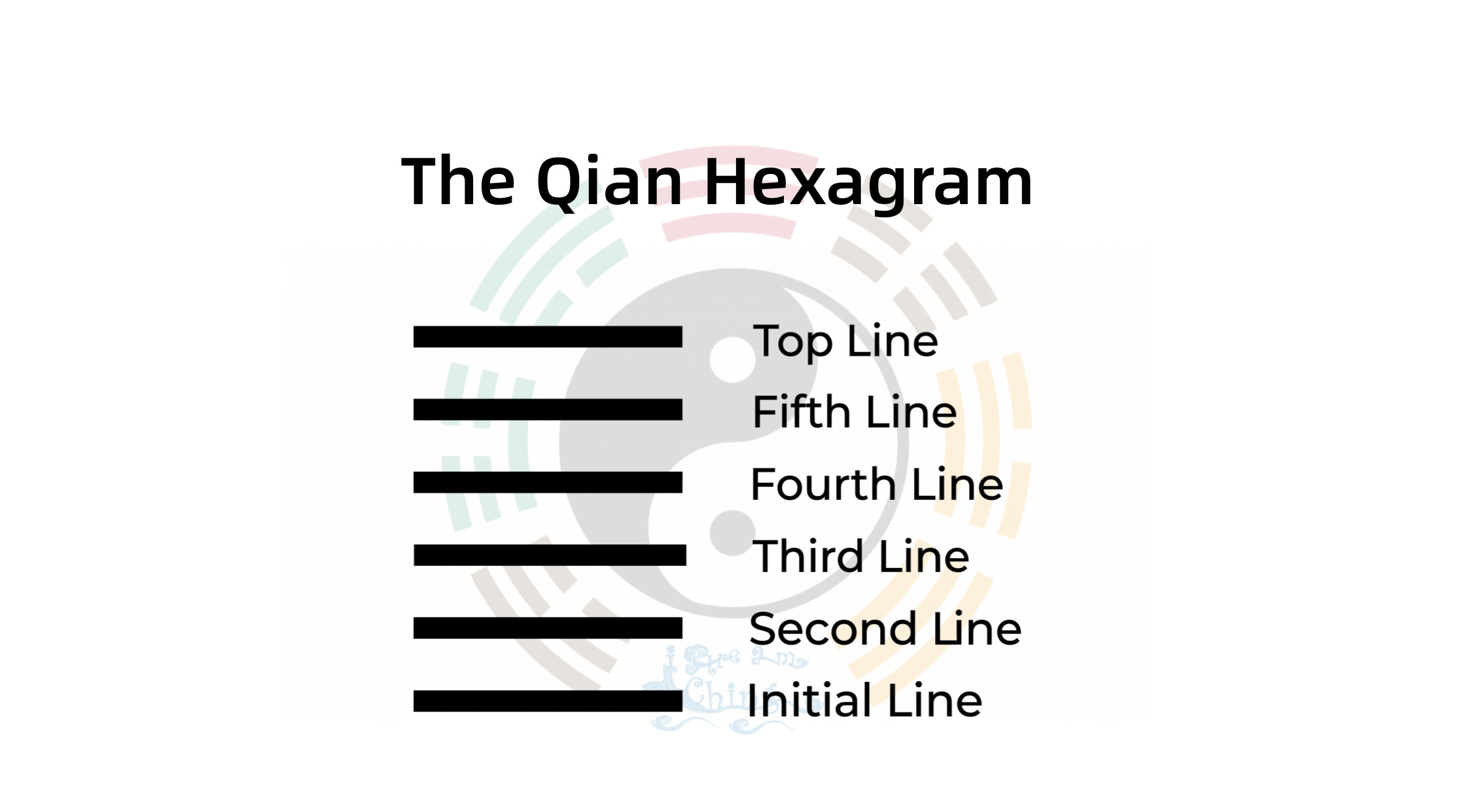
As shown below in the Qian Hexagram:
Time of divination: February 10, 2023.
Stem and branch time: the X D year, the I C month, the VI M day (void: E and F).
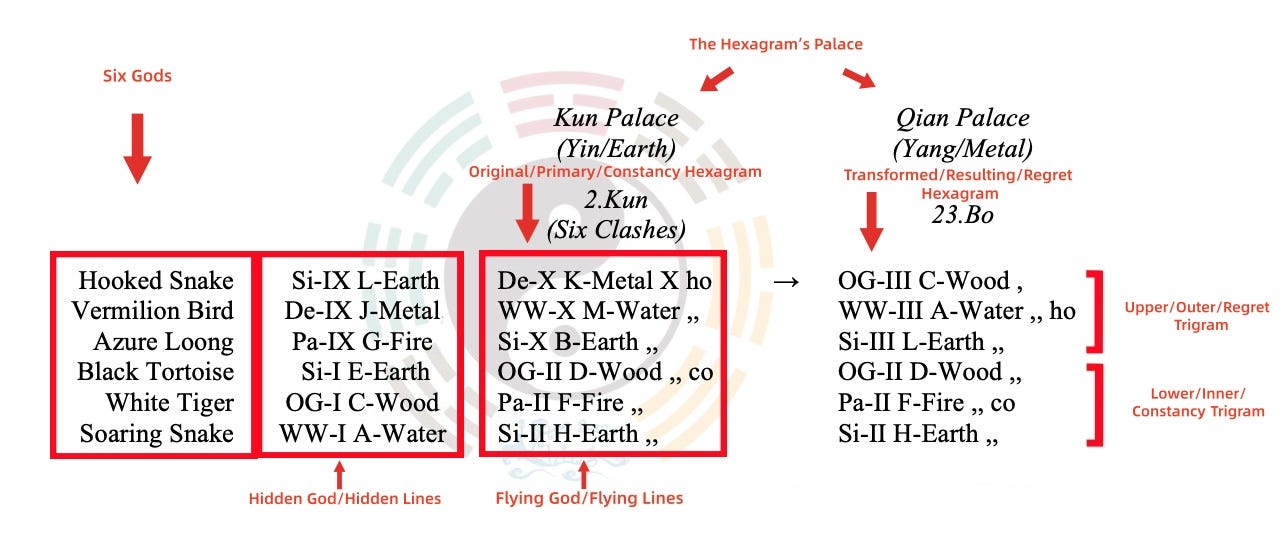
When the Kun Hexagram represents space, the line position represents time, and the Top Line is the endpoint.
When the Kun Hexagram represents the patient, this means the person is about to die.
These points will all be explained gradually later on.
We will explain the exact procedure later, so there is no need to worry for now.