
Disclaimer:
All personal information in this case study has been anonymized or omitted. This case study is provided for learning and reference only. It is not intended as medical, veterinary, legal, financial, investment, or other professional advice.
III. Arranging the Six Lines Chart
Part 1.1. Casting a Hexagram with Three Coins
In Six Lines divination, the first step is to cast the hexagram correctly. The traditional method uses three copper coins.
Before casting, write down the question and the exact time of casting. In Na Jia and Six Lines divination, the casting time is an essential part of the chart. One divination should focus on one clear question, and the question should not be changed during the casting process.
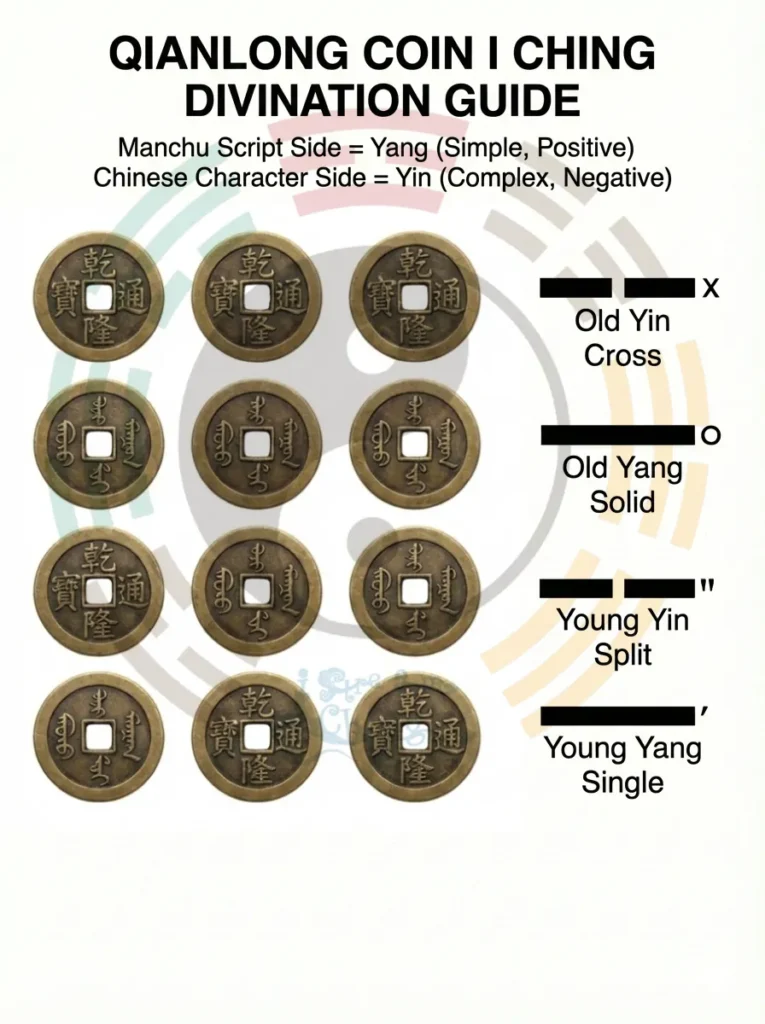
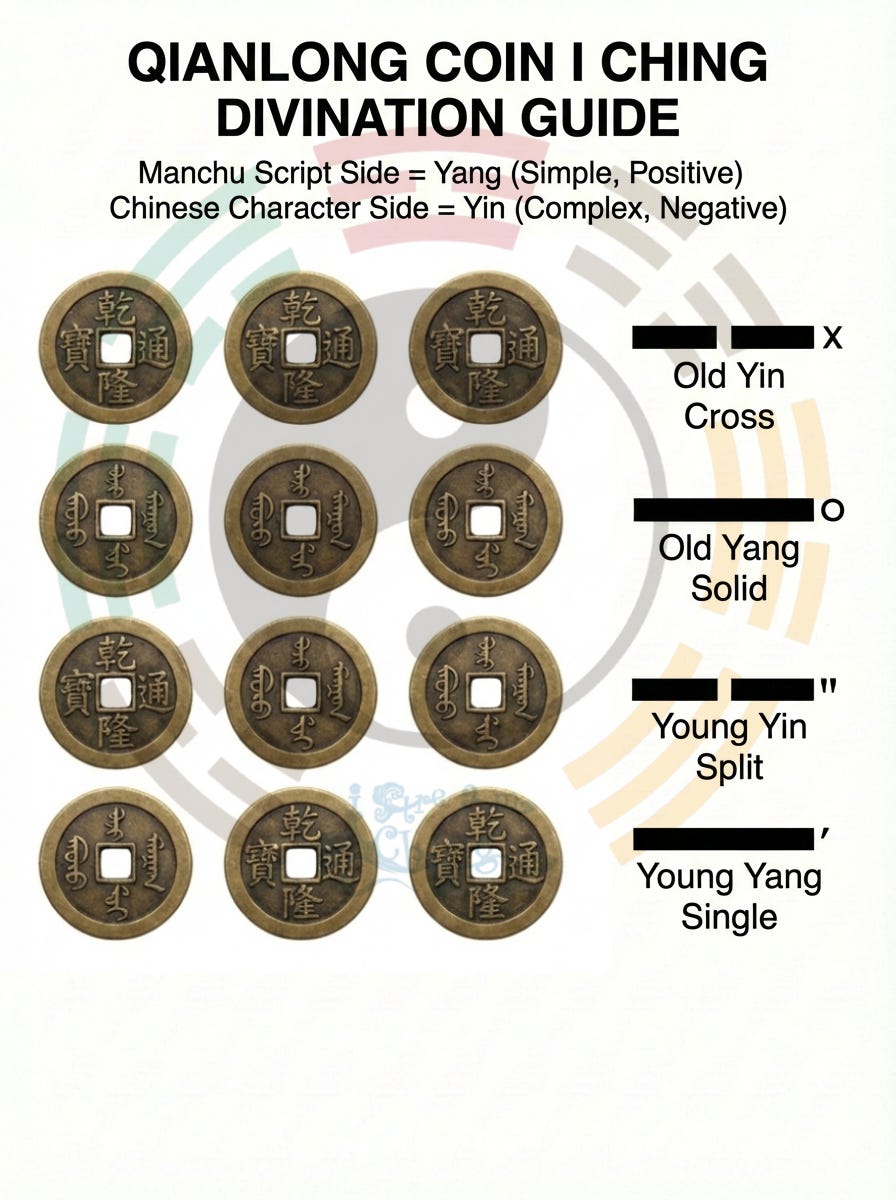
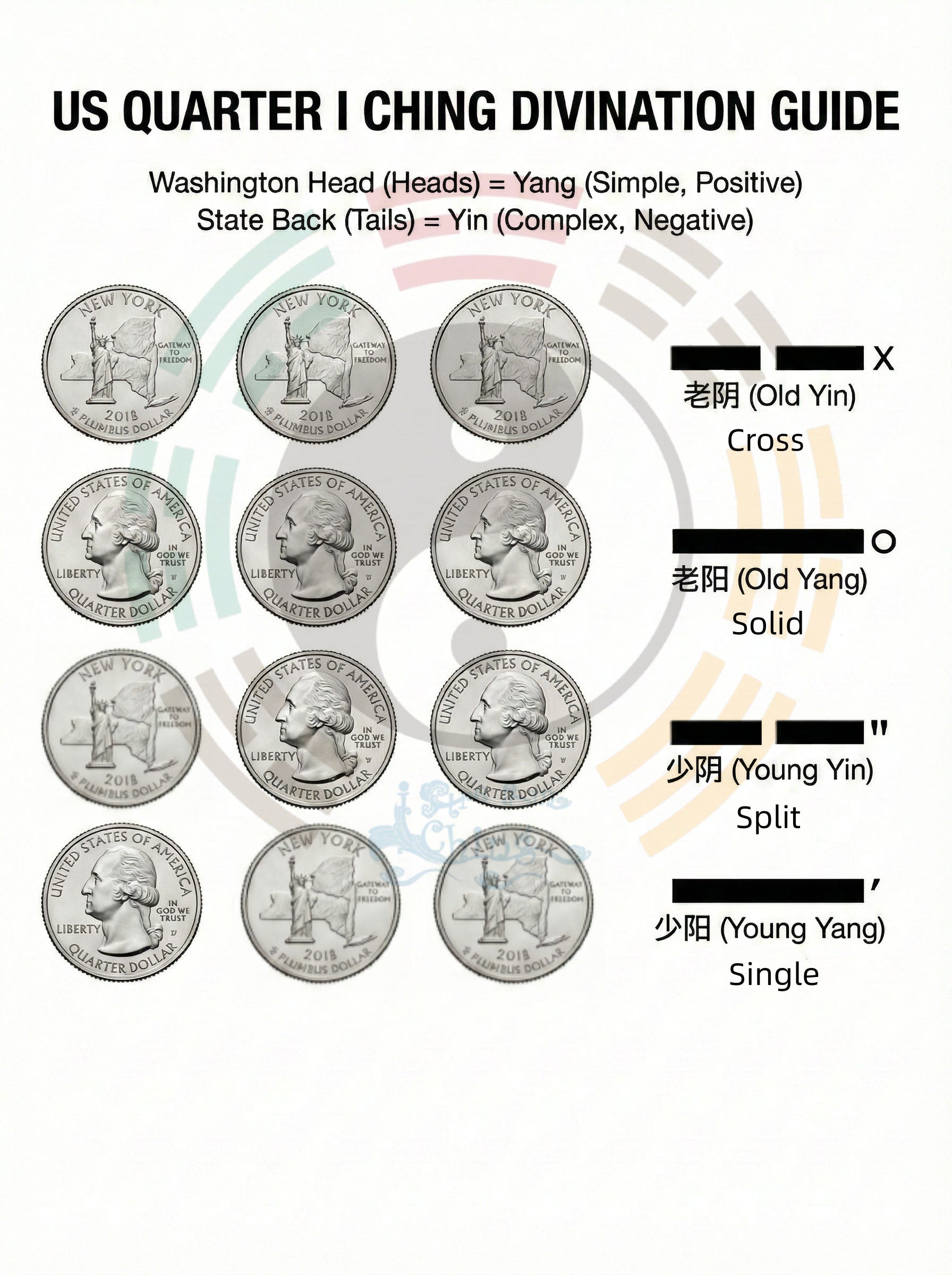
Before casting, clearly distinguish the front and back of the coins, and set which side represents yang and which side represents yin. A practical rule is to treat the simpler side as yang and the more detailed or patterned side as yin. Once this rule is set, it must remain unchanged throughout all six casts.
When casting the hexagram, place the three coins together between both palms. At this moment, silently focus on the matter you wish to predict, calm the mind for about one minute, and allow the person, Heaven, and the matter being asked to enter a state of resonance.
After this, shake the coins six times and record the line image produced by each cast.
The coins may produce the following four combinations:
When there is one back and two faces, this is called “single.” It is drawn as “—” and represents Young Yang.
When there are two backs and one face, this is called “split.” It is drawn as “–” and represents Young Yin.
When there are three backs and no faces, this is called “solid.” It is drawn as “O” and represents Old Yang. This is an active line.
When there are three faces and no backs, this is called “cross.” It is drawn as “×” and represents Old Yin. This is also an active line.
Each cast produces one line. Since a complete hexagram contains six lines, the coins must be shaken and recorded six times. The first cast is the first line and is drawn at the very bottom of the hexagram. Each following line is then drawn above the previous one. The sixth cast becomes the sixth line and is drawn at the very top.
If the hexagram contains “×” or “O”, then a transformed hexagram must also be drawn. This is because “O” represents Old Yang, which changes into Yin, while “×” represents Old Yin, which changes into Yang. These active lines show where the original hexagram transforms and how the later development of the matter begins to appear.
For beginners, the most important thing is to remember the order: the hexagram is cast from bottom to top. The first cast is not placed at the top. It forms the foundation of the hexagram. Only after all six lines are recorded can the original hexagram and transformed hexagram be properly arranged.
Note
The yarrow-stalk method is the classical divination procedure, but it is detailed and not always practical for quick use. This simplified guide therefore focuses on the widely used three-coin method.
Avoid repeated casting on the same matter within a short period of time. Repeated casting often creates noise and makes verification difficult. A divination answer should be treated as one complete event, formed by the interaction of the question, the person’s attention, the timing, and the cast.
Readers who want to study the full classical ritual may consult Studies on Ancient I Ching Divination Cases (Zhouyi Gushi Kao, 《周易古筮考》), Volume One: Divination Rituals. For the Time Method and other practical casting tools, see The I Ching Divination Manual: A Step-by-Step Guide to Six Lines Divination (Wen Wang Gua) with Clear Answers and Real-World Decisions, or visit ichingstream.com/divination.
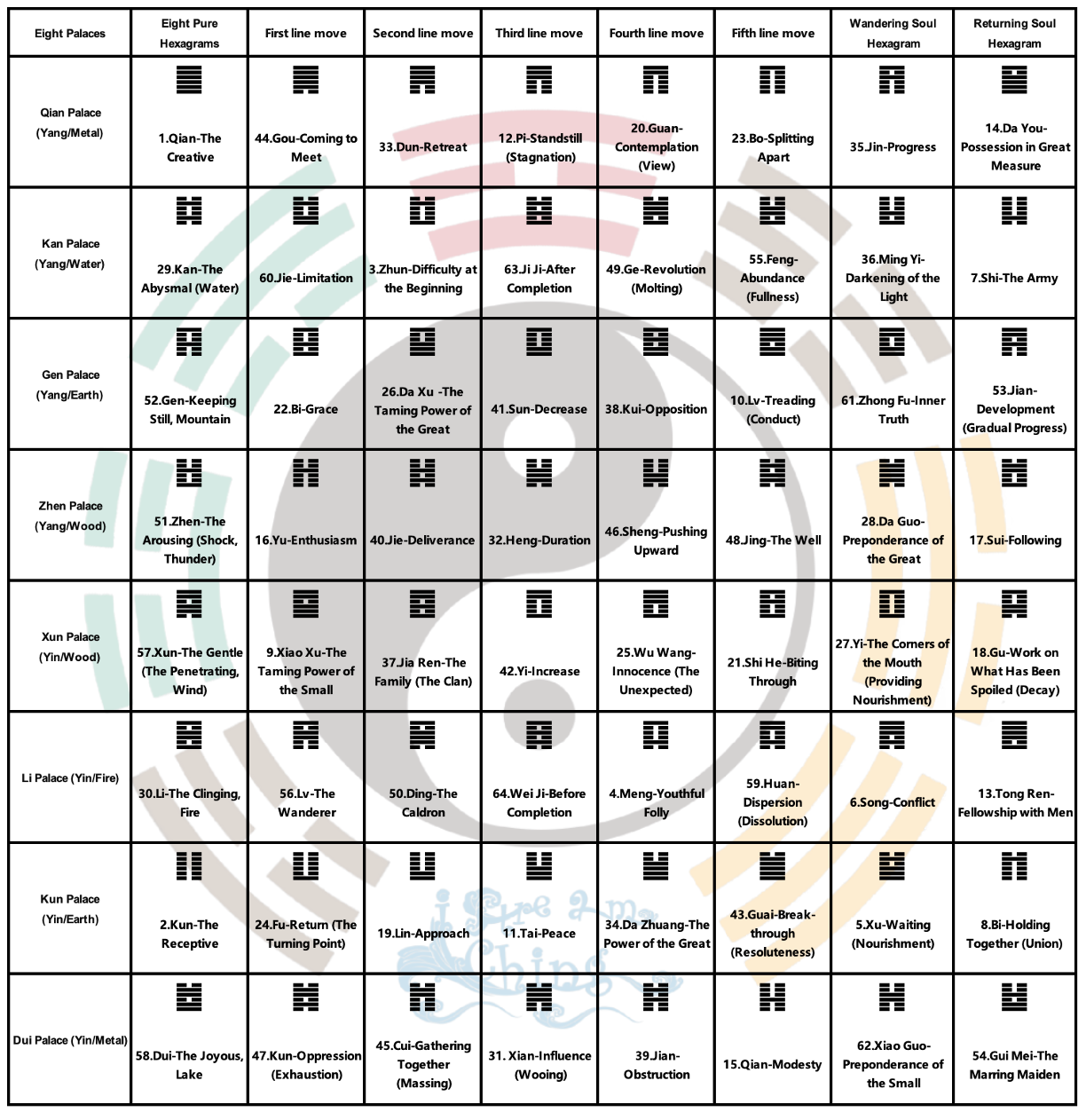
For the complete practical reference charts used in hexagram interpretation, including key tables for Six Lines divination, please visit https://www.ichingstream.com/reference-charts/.
You may also bookmark this page and the Chinese Perpetual Calendar at https://www.ichingstream.com/perpetual-calendar/ for convenient reference during future practice.