Disclaimer:
All personal information in this case study has been anonymized or omitted. This case study is provided for learning and reference only. It is not intended as medical, veterinary, legal, financial, investment, or other professional advice.
II. Understanding Six Lines Divination
Part 2.4. The Main Hexagram and the Changing Hexagram
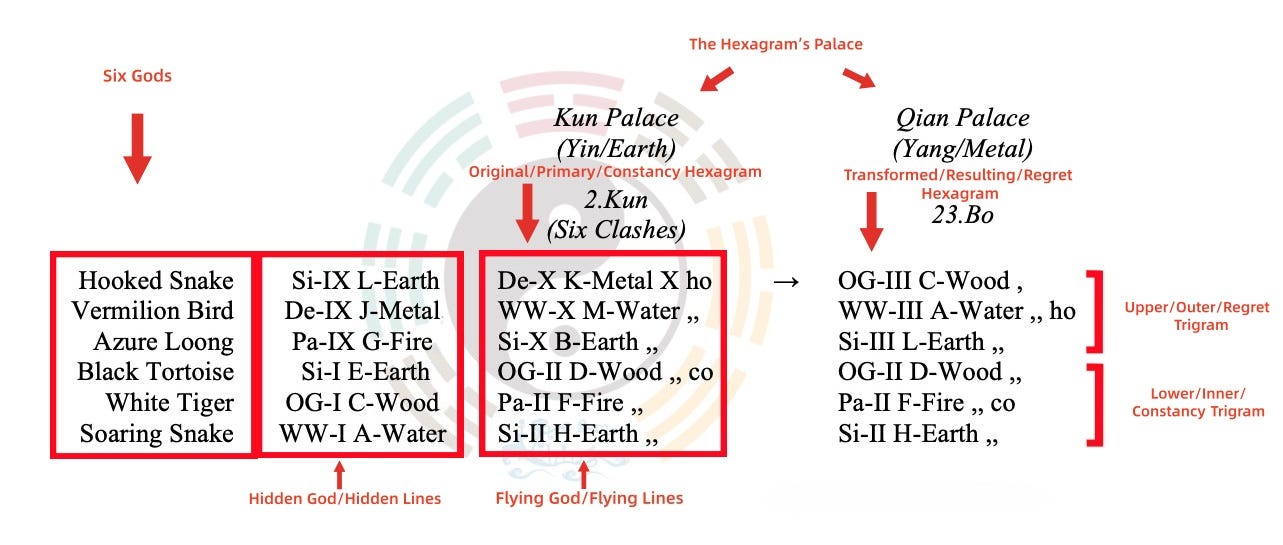
In I Ching divination, the hexagram first obtained is called the main (primary) hexagram. It represents the original structure of the matter being asked about. When one or more lines in the main hexagram is active, the structure of the hexagram also changes. These moving lines are called active lines, and the hexagram formed after the movement is called the changing (transformed) hexagram.
The changing hexagram is also called the resulting hexagram. The word resulting means “to go toward” or “to arrive at.” When a line moves from one state to another, the hexagram is said to “go toward” another hexagram. Therefore, the changing hexagram is not merely a second image placed after the first one. It shows the direction toward which the matter is moving.
In practical divination, the main hexagram usually represents the beginning of the matter, that is, the current condition at the moment of divination. It reflects the present situation, the existing structure, and the forces already at work. The mutual hexagram represents the process through which the matter develops. The mutual hexagram is a new hexagram formed from the second to fourth lines of the main hexagram as the lower trigram, and from the third to fifth lines as the upper trigram. We will explain this in detail in later lessons. The changing hexagram usually represents the end of the matter, that is, the result or later development of the question.
However, this rule should not be applied mechanically. In some cases, the main hexagram can also point to the future, especially when the hexagram is static or when the hexagram itself functions as an omen. The exact meaning of time and space must always be judged according to the actual question, the structure of the hexagram, and the situation being divined.
The movement from the main hexagram to the changing hexagram is one of the most important ideas in I Ching divination. It shows that things are not fixed. A matter has its present condition, but once movement appears, the direction of the matter also begins to change. The active lines are the key points where this change takes place.
This is also why the Chinese everyday expression “to change the hexagram (biàn guà,变卦)” later came to mean changing one’s mind, becoming inconsistent, or failing to keep a promise. Its original meaning came from divination: the hexagram changes because the lines are active. Over time, this technical divination term entered ordinary language and came to describe a person whose attitude or decision changes from one moment to the next.
In learning I Ching divination, understanding the main hexagram and the changing hexagram is essential. The main hexagram tells us where the matter stands now. The changing hexagram shows where it is heading. The active lines reveal the turning points between the two. Together, they allow the diviner to see not only a static picture, but also the movement and development of the matter.