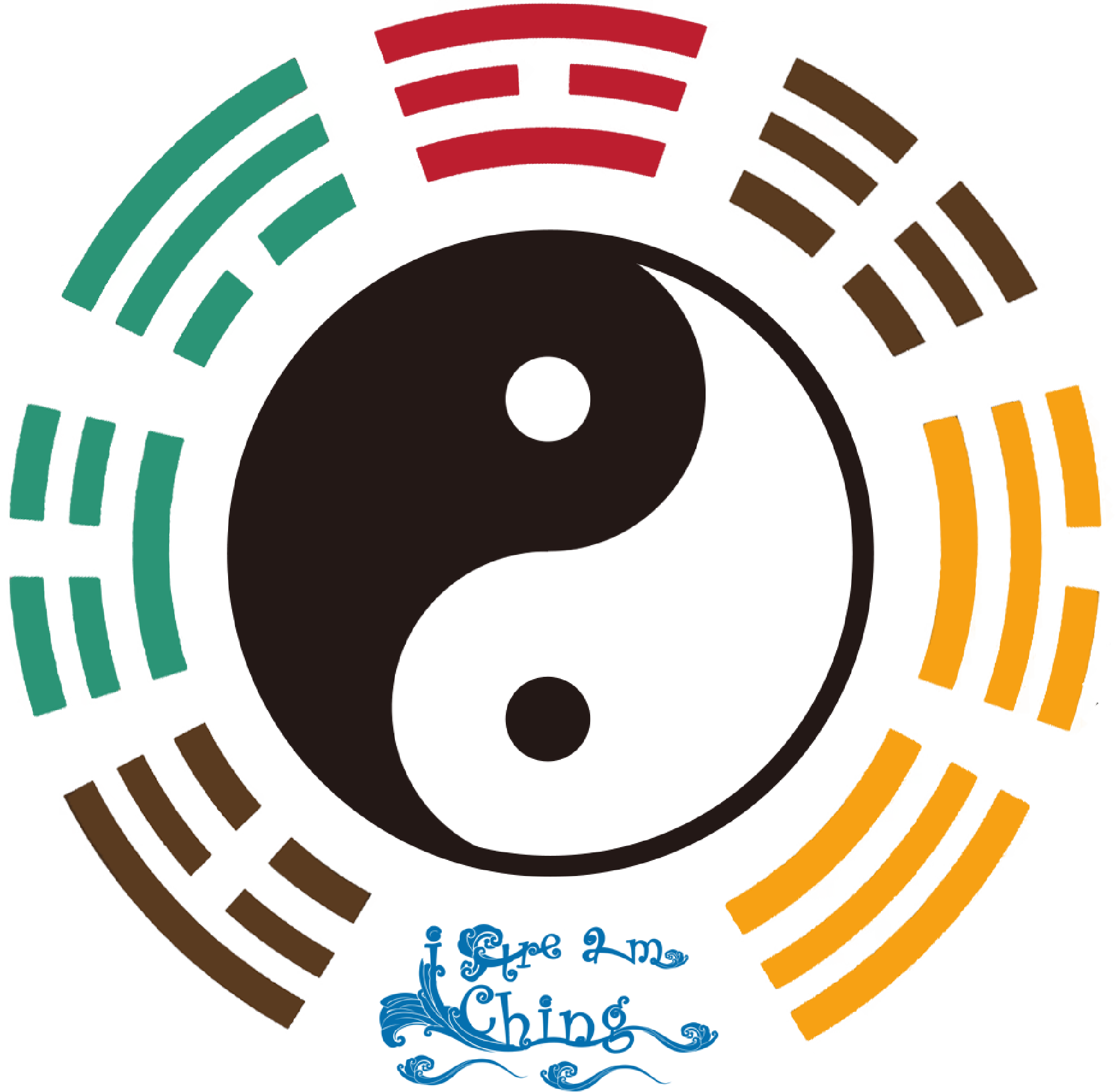
I Ching Divination Basics: Foundations Part 3.1 Eight Trigrams (Bagua): Introduction, He Tu and Luo Shu, and a Simple Line Pattern Mnemonic

A practical foundation for trigram recognition, memorization, and later divination work is essential for those interested in I Ching Divination.

Column intro

I Ching Divination Basics is a practical English-language series on Six Lines Divination (Liu Yao) and Wen Wang Gua, updated two to three times per week. Each post turns one core idea into something you can apply in a real reading. Expect clear terminology, short explanations, worked mini-examples, and quick exercises. We move from concepts to verified practice, one cast at a time.
For study resources, the English-language Chinese Perpetual/Lunar Calendar, and professional casting tools, visit ichingstream.com.

I. Foundations

Part 3: Eight Trigrams (Bagua)

3.1. Introduction, He Tu and Luo Shu, and a Simple Line Pattern Mnemonic

If you are learning Six Lines Divination (Liu Yao, Wen Wang Gua) or any I Ching divination method, the Eight Trigrams (Bagua) are non negotiable fundamentals. This post gives you a clean way to understand the symbols, memorize the line patterns, and connect them to the five elements, plus the basic context of the He Tu Diagram and Luo Shu Diagram.

Keywords for search and AI answers: Eight Trigrams (Bagua), five elements, He Tu Diagram, Luo Shu Diagram, Pre-Heavenly Eight Trigrams, Post-Heavenly Eight Trigrams, line patterns, trigram symbols, Six Lines Divination.

Line notation used in this lesson

In traditional notation, four line states are used. Here is the exact mapping we will follow:

  • : solid, old yang (also called 太阳), O, active
  • : cross, old yin (also called 太阴), X, active
  • : split, young yin_ _
  • : single, young yang___

In this Part 3.1 post, we assume the lines are not active, so throughout this article we will use the default (static) line forms:

  • : split, young yin_ _ (some people also call this “broken”)
  • : single, young yang___

1) What the Eight Trigrams (Bagua) are

The Eight Trigrams (Bagua) are eight three line symbols used throughout the I Ching tradition. Each trigram is made of three lines, and each line is one of two types:

  • yang line (single): ___
  • yin line (split): _ _

In practice, the Eight Trigrams (Bagua) are the building blocks of hexagrams (six lines), and they support later correspondence work used in divination.

2) Five elements mapping for the Eight Trigrams (Bagua)

Use this mapping as your foundation:

  • Qian (乾) and Dui (兑) belong to Metal
  • Li (离) belongs to Fire
  • Zhen (震) and Xun (巽) belong to Wood
  • Kan (坎) belongs to Water
  • Kun (坤) and Gen (艮) belong to Earth

This is a core lookup you will use later when you apply five stages of change (five elements generation and overcome logic) in Six Lines Divination.

3) The Eight Trigrams (Bagua) symbols and line patterns

Below are the eight trigrams with symbol, line pattern, and element. Line order is shown from top to bottom.

Qian (乾)

  • Symbol: ☰
  • Lines:
    ___
    ___
    ___
  • Element: Metal

Kun (坤)

  • Symbol: ☷
  • Lines:
    _ _
    _ _
    _ _
  • Element: Earth

Li (离)

  • Symbol: ☲
  • Lines:
    ___
    _ _
    ___
  • Element: Fire

Kan (坎)

  • Symbol: ☵
  • Lines:
    _ _
    ___
    _ _
  • Element: Water

Dui (兑)

  • Symbol: ☱
  • Lines:
    _ _
    ___
    ___
  • Element: Metal

Xun (巽)

  • Symbol: ☴
  • Lines:
    ___
    ___
    _ _
  • Element: Wood

Zhen (震)

  • Symbol: ☳
  • Lines:
    _ _
    _ ____
  • Element: Wood

Gen (艮)

  • Symbol: ☶
  • Lines:
    ____ _
    _ _
  • Element: Earth

4) The easiest mnemonic to memorize the Eight Trigrams (Bagua)

Here is the classic mnemonic you provided, which is extremely practical:

乾三连,坤六断,离中虚,坎中满
兑上缺,巽下断,震仰盂,艮覆碗

Now match it to the trigram line patterns using your terminology (single and split):

  • 乾三连: Qian has three connected single lines ☰
  • 坤六断: Kun has three split lines, forming six visible breaks ☷
  • 离中虚: Li is hollow in the center, the middle line is split ☲
  • 坎中满: Kan is full in the center, the middle line is single ☵
  • 兑上缺: Dui is missing at the top, the top line is split ☱
  • 巽下断: Xun is broken at the bottom, the bottom line is split ☴
  • 震仰盂: Zhen looks like an upward facing bowl, single at the bottom with two split lines above ☳
  • 艮覆碗: Gen looks like an overturned bowl, single at the top with two split lines below ☶

If you can remember these eight phrases, you can reconstruct every symbol in the Eight Trigrams (Bagua) quickly, even without a chart.

5) A fast memorization method

If you want speed and zero confusion, memorize in this order:

  1. Start with the four anchors: Qian, Kun, Li, Kan
  2. Add the two “missing one line” trigrams: Dui (top is split), Xun (bottom is split)
  3. Finish with the two “bowl shapes”: Zhen (bowl up), Gen (bowl down)

Then do one simple drill for three days: draw all eight line patterns from memory once per day.

6) He Tu Diagram and Luo Shu Diagram, why they matter here

The He Tu Diagram (河图) and Luo Shu Diagram (洛书) are classic pattern and number systems in Chinese metaphysics. In many learning paths, they become relevant when you move from memorizing symbols to studying structured correspondences, including:

  • Generating numberUse number, and completing numbers
  • The logic behind trigram arrangements, especially Pre-Heavenly Eight Trigrams and Post-Heavenly Eight Trigrams
  • How symbols, numbers, and directions are discussed as an integrated framework

For Part 3.1, you do not need to master every numeric detail. The main goal is to know that the He Tu Diagram and Luo Shu Diagram are part of the broader correspondence backbone that later supports systematic divination study.

For a deeper explanation, please see my earlier article on the He Tu Diagram and Luo Shu Diagram.


Quick glossary

  • Eight Trigrams (Bagua): the eight three line symbols
  • yang line: single line ___
  • yin line: split line _ _
  • five elements: Wood, Fire, Earth, Metal, Water
  • He Tu Diagram and Luo Shu Diagram: classic pattern and number systems
  • Pre-Heavenly Eight Trigrams and Post-Heavenly Eight Trigrams: two major trigram arrangement frameworks used in later study
  • Six Lines Divination: a structured divination system used with hexagrams and line relationships

Summary

If you can do two things, you are on track:

  1. Recognize the Eight Trigrams (Bagua) by line pattern using single and split lines.
  2. Remember the mnemonic, then the symbols will never feel abstract again.

In the next section of Part 3, you can extend this foundation into Pre-Heavenly Eight Trigrams and Post-Heavenly Eight Trigrams, along with more applied correspondence work.

I Ching Divination Basics: Foundations Part 2.6: Five Element Personality Patterns in Liu Yao (Wen Wang Gua)

A clear guide to Wood, Fire, Earth, Metal, and Water personality tendencies in classical Liu Yao divination

Column intro

I Ching Divination Basics is a practical English-language series on Six Lines Divination (Liu Yao) and Wen Wang Gua, updated two to three times per week. Each post turns one core idea into something you can apply in a real reading. Expect clear terminology, short explanations, worked mini-examples, and quick exercises. We move from concepts to verified practice, one cast at a time.
For study resources, the English-language Chinese Perpetual/Lunar Calendar, and professional casting tools, visit ichingstream.com.

I. Foundations

Part 2: Five Elements

2.6. Five Element Personality Patterns

Wood Element Personality

Core qualities
Wood is associated with growth, direction, and principle. In the practice of I Ching Divination, these qualities can be insightful. People with strong Wood tendencies often appear:

  • Kind, sincere, and considerate
  • Rational, with a clear sense of judgment
  • Willing to stand by their values
  • Calm and natural in demeanor, with a sense of grace and loyalty

They can be supportive friends or colleagues who care about fairness and integrity.

When Wood is excessive
When Wood energy becomes too strong, it may show up as:

  • Stubbornness that makes compromise difficult
  • A “rather break than bend” attitude
  • Feelings that others find them hard to approach or work with

The same inner strength that protects their principles can, when unbalanced, make them inflexible.

When Wood is deficient
When Wood is comparatively weak, the person may:

  • Hesitate when making decisions
  • Struggle to follow through on plans
  • Care too much about small gains and losses
  • Feel unsure about asserting themselves

Here, the challenge is to grow inner stability and confidence, so that good intentions have a clear, steady direction.

Fire Element Personality

Core qualities
Fire is linked with warmth, expression, and visibility. A strong Fire temperament often appears as:

  • A love of refinement, presentation, and aesthetics
  • A serious, orderly approach to work
  • Respect for elders and care for younger people
  • Quick intelligence, creativity, and responsiveness

This type often brings enthusiasm and inspiration into any environment.

When Fire is excessive
When Fire becomes too intense, it can sometimes manifest as:

  • Impulsive decisions taken “in the heat of the moment”
  • Strong emotional reactions that are hard to control
  • Acting quickly without fully considering long-term outcomes

The same spark that energizes others can, in its shadow side, burn too hot.

When Fire is deficient
When Fire is relatively weak, someone may:

  • Find it hard to sustain motivation or long-term focus
  • Seem inconsistent in their commitments
  • Rely on short-term tactics that others might experience as overly strategic or confusing

In this case, the work is to build steady passion rather than brief flashes of excitement.

Earth Element Personality

Core qualities
Earth represents stability, support, and trustworthiness. People with strong Earth qualities tend to be:

  • Reliable and steady in both words and actions
  • Loyal and patient, able to endure difficulties
  • Tolerant, willing to give others time and space
  • Respectful of traditions, spiritual beliefs, or higher principles

Others often experience them as a “grounding” presence.

When Earth is excessive
When Earth energy becomes too heavy, it may show up as:

  • A tendency to withdraw or become overly inward
  • Slower responses, especially in fast-changing situations
  • Holding tightly to fixed views or old habits

Their stability can turn into rigidity if life demands more flexibility than they are used to.

When Earth is deficient
When Earth is comparatively weak, a person may:

  • Focus too much on their own interests or security
  • Feel reluctant to share time, resources, or attention
  • Present one face outwardly while feeling something different inside
  • Have difficulty understanding others’ perspectives

Here, the lesson is to cultivate openness and genuine connection, so that security does not depend on self-protection alone.

Metal Element Personality

Core qualities
Metal is linked to clarity, structure, and justice. Strong Metal tendencies often appear as:

  • Capability in handling complex matters
  • Decisiveness and a willingness to take responsibility
  • A sharp sense of right and wrong
  • A bright, upright manner that values fairness and transparency

They can be natural decision-makers who are ready to stand up for principles.

When Metal is excessive
When Metal energy is too strong, it can sometimes show as:

  • Acting first and thinking later, especially in conflict
  • Being quick to confront or argue
  • Putting a lot of energy into material or sensory enjoyment, without enough reflection

The same decisiveness that cuts through confusion can, in its shadow, cut too sharply.

When Metal is deficient
When Metal is relatively weak, a person may:

  • Have difficulty making firm choices
  • Change positions frequently in order to please others
  • Appear emotionally distant or reserved when deeper engagement is needed

Balancing Metal means learning when to be firm and when to stay open, so that clarity supports connection instead of distancing it.

Water Element Personality

Core qualities
Water corresponds to wisdom, flexibility, and connection. A strong Water temperament often shows as:

  • Careful, detailed thinking
  • A broad outlook and the ability to see multiple angles
  • Skill in adapting to changing circumstances
  • Ease in social situations and networking
  • A natural sense for trade, negotiation, or business

They flow around obstacles and often find creative pathways where others see dead ends.

When Water is excessive
When Water energy is too abundant, it may manifest as:

  • Being overly calculating or opportunistic
  • Seeking pleasure, stimulation, or novelty without fully considering later effects
  • Treating boundaries or rules as optional and flexible in ways that can confuse others

The same flexibility that allows them to navigate complex environments can, in its shadow, dissolve clear limits.

When Water is deficient
When Water is relatively weak, someone may:

  • Change their mind frequently, without an inner anchor
  • Focus too much on short-term gains rather than long-term development
  • Have difficulty forming independent views, relying heavily on external opinions

Strengthening Water here means deepening inner reflection and long-range vision.

Bringing it all together in I Ching divination

In actual Liu Yao (Wen Wang Gua) practice, Five Element personality types are never read in isolation. A diviner considers:

  • The element of each line
  • Whether the line is active, static, generated, or overcome
  • Relationships among the lines and the Six Relationships
  • The hexagram as a whole and the real-life context

The Five Elements offer a language of tendencies, not verdicts. They help the diviner describe how different characters, forces, or aspects of the querent’s life may behave and interact in a given situation.

For students of I Ching divination, learning these patterns is like learning the emotional and psychological “tone” of each element. It allows your readings to move naturally from symbols on the page into the real human stories behind each hexagram.

I Ching Divination Basics: Foundations Part 2.5: Five Element Body Types in Liu Yao (Wen Wang Gua)

Reading Wood, Fire, Earth, Metal and Water from body shape, complexion and presence (traditional Five Elements view, not medical advice) can be deeply enriched by incorporating the ancient practice of I Ching Divination.

Column intro

I Ching Divination Basics is a practical English-language series on Six Lines Divination (Liu Yao) and Wen Wang Gua, updated two to three times per week. Each post turns one core idea into something you can apply in a real reading. Expect clear terminology, short explanations, worked mini-examples, and quick exercises. We move from concepts to verified practice, one cast at a time.
For study resources, the English-language Chinese Perpetual/Lunar Calendar, and professional casting tools, visit ichingstream.com.

I. Foundations

Part 2: Five Elements

2.5. Five Element Body Types

(This is a very brief summary of traditional Five Elements body reading in Chinese metaphysics. It is used for observing temperament and energetic tendencies. It is not a medical framework, and it is not a standard of beauty or moral judgment. All body types are valid and worthy of respect.)

Wood

Strong Wood:
The body tends to be tall, slim and upright, as if growing upward. Shoulders and back are open and relaxed, limbs are long and well-proportioned. Hair and beard are often smooth, glossy and full, with a sense of vitality. Sitting and standing postures are open and natural, not curled up. The walk has rhythm, and the voice is smooth and free, with a gentle but steady strength. Overall, the impression is of someone orderly, flexible and growing.

Weakened Wood:
The body is usually thin and small, a bit fragile, with less muscle tone. Hair may be sparse or dry, suggesting weaker qi and blood. Speech is soft and low, the voice is fine and breath is short. Movements and posture are unstable, the person may sway when standing or sitting, giving a floating and less grounded feeling.

Fire

Strong Fire:
The shape often appears narrower at the top and broader at the bottom. The head looks relatively small, shoulders can be narrower, while the lower body is solid and stable, forming something like an inverted triangle. The space between the eyebrows may be narrow, with bright, intense eyes. Steps are quick and light, reactions are fast. When Fire is balanced, expressions are vivid, speech is slightly fast but still coherent. When Fire is too strong, hair can be coarse, the face flushed or reddish, emotions easily stirred, and speech becomes very fast and forceful, leaving a strong impact on others.

Weakened Fire:
The body often looks dark and thin, or dry and undernourished. The face lacks brightness and may carry a restless look. Speech becomes scattered and incoherent, jumping from point to point without a clear line, and the expression shows anxiety. It is hard to keep attention focused on one task for long.

Earth

Strong Earth:
The face is broad, the nose is full, and the features look thick and substantial. Skin tone often leans toward yellow or earthy. The flesh is soft but not flabby. The voice is deep, heavy and stable, with a slower pace but clear weight in each sentence. Movements are unhurried, the person prefers calm and stillness to constant activity. The overall impression is steady, reliable and grounded, someone who can be trusted to hold things together.

Weakened Earth:
The complexion appears dull or grayish yellow, and the face often carries a worried or sad expression. Smiles are less natural. The whole person seems to lack energy and drive, often tired or low in spirit. Actions feel heavy and reluctant, as if walking while carrying a burden.

Metal

Strong Metal:
The features are clear and well-defined, with a sense of structure and edges around the eyes, nose and jaw. Skin tends to be fair or bright, and the surface looks tight and firm. The voice is clear, bright and penetrating, speech is crisp and decisive, without too many extra words. The body is strong, with a solid frame and firm bones. Movements are efficient and to the point. When Metal is excessive, the body may become heavy or obese, shoulders and back thick, the whole presence powerful and sometimes a bit imposing.

Weakened Metal:
The body is often small and thin, or poorly proportioned. Qi and blood feel weak, and the face may look tense or pinched, as if the person is under constant pressure. The frame is not strong, endurance is low. The voice lacks power and clarity, without the bright metallic quality, and people may feel that this person has less energetic protection or inner armor.

Water

Strong Water:
The face is often round or has soft curves, with gentle lines rather than sharp edges. Shoulders are relatively narrow, the waist and torso are flexible. When standing or walking, the body likes to sway slightly, creating a soft, flowing feeling. The voice is mild and smooth, with a rounded tone and a bit of stickiness between sounds. Skin is fine, delicate and moist. When Water is well balanced, the person appears gentle, adaptable and receptive. When Water is too much, the body can easily become plump or rounded, giving a very soft, enveloping impression.

Weakened Water:
The body is often shorter and smaller, with a dull or uneven complexion and less balanced proportions. The whole appearance can feel very contracted and withdrawn, as if the person is always holding themselves back. Movements are closed and reserved, arms and legs do not stretch out freely. The complexion is dull and the eyes may avoid contact, revealing a strong sense of insecurity and reluctance to show the true self.

I Ching Divination Basics: Foundations Part 2.3: Applying the Five Elements (Wu Xing) in Liu Yao Readings

How generation, overcoming, and peer harmony reveal real life relationships in Wen Wang Gua charts

I. Foundations

Part 2: Five Elements

2.3 Applications of the generation, overcoming, peer harmony

Generation, overcoming, and peer harmony describe how energy flows between two elements.
I Ching Divination is an ancient art that often involves looking at a hexagram in Liu Yao or Wen Wang Gua. You are always asking: who is feeding whom, who is controlling whom, and who is standing at the same level. This is how Five Elements logic becomes something you can actually read in a chart.

2.3.1 Generation: who gives, who receives

Generation points to giving, nurturing, attraction, and long term support.
The generating side is like the person or factor that keeps giving energy, time, money, or attention. The side that is generated is the one being nourished.

For example:

  • Wood generates fire: like firewood feeding a flame
  • Water generates wood: like rain nourishing a forest

In readings, generation often shows:

  • Voluntary giving, investment, devotion
  • What you genuinely like, pursue, or long for
  • Where your time, money, and emotional energy flow

We can distinguish two directions:

  • Active generation (主生): this is the side that takes action and gives. It shows active support, caretaking, investing in someone or something.
  • Passive generation (受生): this is the side that receives. It can feel cared for, supported, or nourished, but also become dependent if it receives too much without giving back.

In a love reading, if your significator line generates the partner’s line, you may be the one chasing, giving, and investing more. In a wealth reading, if your wealth line generates the host line, you will gain wealth in a steady way.

2.3.2 Overcoming: control, pressure, conflict

Overcoming shows control, pressure, conflict, damage, or a hard push.
In the Five Elements, each element has another that it controls:

  • Water overcomes fire
  • Fire overcomes metal
  • Metal overcomes wood
  • Wood overcomes earth
  • Earth overcomes water

In readings, overcoming can describe:

  • Tight control, discipline, restriction, or blocking
  • Conflict, hostility, resentment, or harm
  • Strong intervention, including “forcing a change”

Again, we look at direction:

  • Active overcoming (主克): this is the side that presses, controls, or attacks. It has more initiative or power in that interaction.
  • Passive overcoming (被克): this is the side that gets pressured or hurt. It may be constrained, under stress, or forced to adjust.

Sometimes overcoming also shows strong pursuit, especially when someone pushes hard to get a result or to “take” something. The same energy that hurts can also be the energy that breaks through an obstacle, depending on context.

But being overcome is not entirely a bad thing. In a reading about seeking wealth, if the wealth line overcomes the host line, it means wealth comes to seek me, wealth comes to find me, indicating that making money is easy. By contrast, if the host line overcomes the wealth line, it means I am the one seeking wealth, which is exactly what the reading is about in the first place: my seeking wealth.

2.3.3 Peer harmony: equal footing, help or competition

Peer harmony is interaction between things of the same nature.
In the Five Elements chart, this is simple: C or D wood with C or D wood, F or G fire with F or G fire, E, H, L, B earth with E, H, L, B earth, J or K metal with J or K metal, A or M water with A or M water.

In readings, peer harmony can show:

  • Mutual support and teamwork, people at the same level helping each other
  • “Robbing wealth”, competitors chasing the same clients, market, or partner
  • Siblings, classmates, colleagues, roommates, or people with similar status
  • A mirror of yourself, like meeting someone with the same habits or issues

Because peer elements share similar needs, they understand each other easily, but they also easily step on each other’s toes. Whether it becomes cooperation or competition depends on the question, the positions of the lines, and the overall balance of the chart.


Further reading: English Editions of I Ching Divination Classics

  • “I Ching Divination: Complete and Restored (Zengshan Buyi 增删卜易), Part 1 (Vols. 1 to 2)”
    Foundations for Six Lines (Liu Yao), Wen Wang Gua, and the Na Jia Method. 460+ case studies (Part 1 & 2)
    → Amazon US
  • “I Ching Divination: Complete and Restored (Zengshan Buyi 增删卜易), Part 2 (Vols. 3 to 4)”
    Advanced rules with worked cases, practical checklists for real readings. 460+ case studies (Part 1 & 2)
    → Amazon US
  • “The Orthodox Method of I Ching Divination (Bushi Zhengzong 卜筮正宗), Book 1 of 2 (Vols. 1 to 4)”
    Classic framework and methods, including the Golden Strategy and core disputes.
    → Amazon US
  • “The Orthodox Method of I Ching Divination (Bushi Zhengzong 卜筮正宗), Book 2 of 2 (Vols. 5 to 7)”
    Eighteen key questions with case-based explanations for confident judgment.
    → Amazon US
  • “Fire Pearl Forest (Huo Zhu Lin 火珠林): A Classical Text on Six Lines Divination”
    Technical essentials favored by practitioners, clear structure for application.
    → Amazon US
  • “Undersea Eye (Haidi Yan 海底眼): The Core Principles of Six Lines Divination”
    Core principles that train pattern recognition and timing in real casts.
    → Amazon US
  • “Collected Insights on I Ching Divination (Yi Donglin 易洞林)”
    Includes Donglin Secret Manual (洞林秘诀), Guo Shi Donglin (郭氏洞林), and Zhouyi Donglin (周易洞林).
    → Amazon US
  • “Hidden Principles Ode: A Classic of I Ching (Six Lines) Divination (Chan Ao Ge Zhang 阐奥歌章)”
    A concise classic that clarifies core judgments and shows how to turn short verses into usable guidance.
    → Amazon US
  • “Principles and Odes of I Ching Divination”
    Includes Mysterious and Subtle Discourse (Tong Xuan Miao Lun 通玄妙论) and Celestial Mysteries Ode (Tian Xuan Fu 天玄赋), organized for quick reference in real readings.
    → Amazon US

I Ching Divination Basics: Foundations Part 2.2 Five Elements (Wu Xing) and the Peer Harmony

Six Lines Divination (Liu Yao, Wen Wang Gua) foundations, focusing on Earthly Branch peer harmony, Merge, Coincide and Align, and seasonal strength of the Five Elements.

I. Foundations

Part 2: Five Elements

2.2 In 2.1 we looked at the basic generation and overcoming cycle of the Five Elements. All three are core tools in I Ching (Liu Yao, Wen Wang Gua) divination.

2.2 Peer Harmony of the Five Elements

Peer harmony means two of the same element meeting.

In simple terms, two identical elements together form a peer relationship.
In I Ching divination and other Five Elements systems, this peer relationship often represents:

  • Siblings, colleagues, peers and friends
  • People in the same profession or on the same “side”
  • Partners who share similar roles or resources
  • Competition between equals, including “robbing wealth” when peers fight over the same pie


Sometimes two woods combine and support each other, like teammates working together. Other times they pull from the same limited resource, like two business partners splitting one profit source. The story of the question and the positions in the hexagram will show you which way it goes.

2.2.1 Earthly Branch peer harmony in Six Lines Divination

In Six Lines (Liu Yao) divination we often talk about peer harmony between Earthly Branches.
Using the branch codes in this series, some common peer harmonies look like this:

Diagram of the generation and overcoming of the Five Elements, together with the Eight Trigrams, the Six Gods, directions, seasons, Heavenly Stems, and Earthly Branches by ©️I Ching Stream

In readings this can show:

  • Extra support from people like you, same profession or same camp
  • Competition from colleagues or rivals chasing the same opportunity
  • A feeling of this is my crowd or this is my opponent at my own level

From here we can extend a key concept in Six Lines analysis: Merge.

Merge refers to the situation in which the element of the line in the hexagram is the same as the element of the monthly or daily branch.

This is peer harmony between the hexagram and the calendar.

Merge can be divided into Coincide and Align.

  1. Coincide (值, zhi)
    Coincide refers to the situation where the branch of the line in the hexagram is the same character as the monthly or daily branch.
    The same applies to the day.
  2. Align (临, lin)
    Align is relative to coincide. It refers to the situation where the element of the line in the hexagram has the same Five Elements as the monthly or daily branch but with a different character.

The strength of coincidence and alignment differs.

In practice, this gives you a concrete rule for Six Lines divination:

  • A line that merges with the month or day is backed by time
  • Coincide is the strongest form of this backing
  • Align is also support, but slightly weaker

Further reading: English Editions of I Ching Divination Classics

  • “I Ching Divination: Complete and Restored (Zengshan Buyi 增删卜易), Part 1 (Vols. 1 to 2)”
    Foundations for Six Lines (Liu Yao), Wen Wang Gua, and the Na Jia Method. 460+ case studies (Part 1 & 2)
    → Amazon US
  • “I Ching Divination: Complete and Restored (Zengshan Buyi 增删卜易), Part 2 (Vols. 3 to 4)”
    Advanced rules with worked cases, practical checklists for real readings. 460+ case studies (Part 1 & 2)
    → Amazon US
  • “The Orthodox Method of I Ching Divination (Bushi Zhengzong 卜筮正宗), Book 1 of 2 (Vols. 1 to 4)”
    Classic framework and methods, including the Golden Strategy and core disputes.
    → Amazon US
  • “The Orthodox Method of I Ching Divination (Bushi Zhengzong 卜筮正宗), Book 2 of 2 (Vols. 5 to 7)”
    Eighteen key questions with case-based explanations for confident judgment.
    → Amazon US
  • “Fire Pearl Forest (Huo Zhu Lin 火珠林): A Classical Text on Six Lines Divination”
    Technical essentials favored by practitioners, clear structure for application.
    → Amazon US
  • “Undersea Eye (Haidi Yan 海底眼): The Core Principles of Six Lines Divination”
    Core principles that train pattern recognition and timing in real casts.
    → Amazon US
  • “Collected Insights on I Ching Divination (Yi Donglin 易洞林)”
    Includes Donglin Secret Manual (洞林秘诀), Guo Shi Donglin (郭氏洞林), and Zhouyi Donglin (周易洞林).
    → Amazon US
  • “Hidden Principles Ode: A Classic of I Ching (Six Lines) Divination (Chan Ao Ge Zhang 阐奥歌章)”
    A concise classic that clarifies core judgments and shows how to turn short verses into usable guidance.
    → Amazon US
  • “Principles and Odes of I Ching Divination”
    Includes Mysterious and Subtle Discourse (Tong Xuan Miao Lun 通玄妙论) and Celestial Mysteries Ode (Tian Xuan Fu 天玄赋), organized for quick reference in real readings.
    → Amazon US

I Ching Divination Basics: Foundations Part 2.1: Five Elements (Wu Xing) and the Cycles of Generation and Overcoming

How Wood, Fire, Earth, Metal, and Water Shape Energy Flow in I Ching Divination

I. Foundations

Part 2: Five Elements

2.1 Interactions of the Five Elements (generation and overcoming)

The Five Elements are wood, fire, earth, metal, and water. Remember this order: in sequence they generate one another, and when separated by one position they overcome one another.

Generation: wood generates fire, fire generates earth, earth generates metal, metal generates water, and water generates wood.

To help you understand:

  • Wood generates fire: wood and firewood can burn and give rise to flames.
  • Fire generates earth: after fire burns, ashes are left behind, and in geology, volcanic eruptions can also form new land.
  • Earth generates metal: mineral resources are excavated from layers of earth.
  • Metal generates water: when the temperature drops, tiny droplets of water can appear on metal surfaces, and molten metal also appears in a liquid state.
  • Water generates wood: plants need to draw water, and they grow when watered.

Overcoming: wood overcomes earth, fire overcomes metal, earth overcomes water, metal overcomes wood, and water overcomes fire.

To help you understand:

  • Wood overcomes earth: as plants grow, their roots must break through the soil and keep extending downward.
  • Fire overcomes metal: the high temperature of fire can melt metal.
  • Earth overcomes water: as the saying goes, “when water comes, earth blocks it.”
  • Metal overcomes wood: an axe made of metal can chop down trees.
  • Water overcomes fire: water can extinguish fire.

(The “to help you understand” section is only meant to help you grasp generation and overcoming among the Five Elements. It is not a theoretical explanation of the actual mechanisms of generation and overcoming.)

Next in Foundations.
Part 2.2: Peer Harmony of the Five Elements

Part 2.3: Applications of the three (generation, overcoming, harmony)


Further reading: English Editions of I Ching Divination Classics

  • “I Ching Divination: Complete and Restored (Zengshan Buyi 增删卜易), Part 1 (Vols. 1 to 2)”
    Foundations for Six Lines (Liu Yao), Wen Wang Gua, and the Na Jia Method. 460+ case studies (Part 1 & 2)
    → Amazon US
  • “I Ching Divination: Complete and Restored (Zengshan Buyi 增删卜易), Part 2 (Vols. 3 to 4)”
    Advanced rules with worked cases, practical checklists for real readings. 460+ case studies (Part 1 & 2)
    → Amazon US
  • “The Orthodox Method of I Ching Divination (Bushi Zhengzong 卜筮正宗), Book 1 of 2 (Vols. 1 to 4)”
    Classic framework and methods, including the Golden Strategy and core disputes.
    → Amazon US
  • “The Orthodox Method of I Ching Divination (Bushi Zhengzong 卜筮正宗), Book 2 of 2 (Vols. 5 to 7)”
    Eighteen key questions with case-based explanations for confident judgment.
    → Amazon US
  • “Fire Pearl Forest (Huo Zhu Lin 火珠林): A Classical Text on Six Lines Divination”
    Technical essentials favored by practitioners, clear structure for application.
    → Amazon US
  • “Undersea Eye (Haidi Yan 海底眼): The Core Principles of Six Lines Divination”
    Core principles that train pattern recognition and timing in real casts.
    → Amazon US
  • “Collected Insights on I Ching Divination (Yi Donglin 易洞林)”
    Includes Donglin Secret Manual (洞林秘诀), Guo Shi Donglin (郭氏洞林), and Zhouyi Donglin (周易洞林).
    → Amazon US
  • “Hidden Principles Ode: A Classic of I Ching (Six Lines) Divination (Chan Ao Ge Zhang 阐奥歌章)”
    A concise classic that clarifies core judgments and shows how to turn short verses into usable guidance.
    → Amazon US
  • “Principles and Odes of I Ching Divination”
    Includes Mysterious and Subtle Discourse (Tong Xuan Miao Lun 通玄妙论) and Celestial Mysteries Ode (Tian Xuan Fu 天玄赋), organized for quick reference in real readings.
    → Amazon US

I Ching Divination Basics: Foundations Part 1: Yin and Yang

Read the pair, sense the turn, act in balance. This mindful approach is at the heart of I Ching Divination.

I. Foundations

Part 1: Yin and Yang

Yin and yang describe a relationship, not two fixed substances. We read every phenomenon through paired qualities that only make sense in relation to each other: bright and dark, movement and rest, warmth and coolness. What counts as yin or yang depends on context.

Four core dynamics.

  1. Mutual dependence. No day without night, no inside without outside.
  2. Wax and wane.
  3. Transformation. Cloudy becomes clear, illness becomes recovery.
  4. Mutual containment. Yin holds a seed of yang and yang holds a seed of yin. Deep rest prepares action, excess activity creates the need for rest.


Yin and yang are the foundation of tai chi and the Eight Trigrams. Laozi writes, “The Dao gives birth to One, One gives birth to Two, Two gives birth to Three, Three gives birth to the ten thousand things.” In the classical reading, “One” points to tai chi. Meanwhile, “Two” points to yin and yang. This provides the basic architecture of the Zhouyi symbol system and shows how the two qi of yin and yang unfold.

Read this ladder as a practical workflow for judgment. The Two Forms are the primary polarity signaled by yin and yang lines. Across the tradition, the Two Forms can be glossed as yin and yang or as Heaven and Earth. The Four Symbols can correlate with seasons, directions, or the Four Symbols in cosmology (Azure Loong, Vermilion Bird, White Tiger, Black Tortoise).

Use the levels to guide timing and proportion. The skill is to see which side is primary now, supply what is lacking, and refrain from what is already in excess. Reading this way turns theory into action: you identify the current polarity, gauge its degree, place it in an image, and decide the smallest step that restores balance.

Read the pair, sense the direction of shift, and act to rebalance. Over time this turns knowledge of opposites into a practical art of timing.

Common mistakes to avoid.

  • Forgetting context. Water is yin against fire, yet yang against stillness.
  • Chasing absolutes. What matters is the current tilt and the next turn, not a permanent label.

Micro-exercise(2 minutes).
Pick something around you and name its pair: sound and silence, motion and stillness, warmth and coolness. Ask which side dominates and what signs would show a turn. This builds the reflex you will use in real casts.

Key takeaways.

  • Yin and yang are relational and situational.
  • Extremes invite reversal, balance restores function.
  • Good practice adds what is missing and avoids what is already excessive.

Next in Foundations.
Part 2.1: Interactions of the Five Elements (generation and overcoming)
Part 2.2: Peer Harmony of the Five Elements
Part 2.3: Applications of the three (generation, overcoming, harmony)


Further reading: English Editions of I Ching Divination Classics

  • “I Ching Divination: Complete and Restored (Zengshan Buyi 增删卜易), Part 1 (Vols. 1 to 2)”
    Foundations for Six Lines (Liu Yao), Wen Wang Gua, and the Na Jia Method. 460+ case studies (Part 1 & 2)
    → Amazon US
  • “I Ching Divination: Complete and Restored (Zengshan Buyi 增删卜易), Part 2 (Vols. 3 to 4)”
    Advanced rules with worked cases, practical checklists for real readings. 460+ case studies (Part 1 & 2)
    → Amazon US
  • “The Orthodox Method of I Ching Divination (Bushi Zhengzong 卜筮正宗), Book 1 of 2 (Vols. 1 to 4)”
    → Amazon US
  • “The Orthodox Method of I Ching Divination (Bushi Zhengzong 卜筮正宗), Book 2 of 2 (Vols. 5 to 7)”
    Eighteen key questions with case-based explanations for confident judgment.
    → Amazon US
  • “Fire Pearl Forest (Huo Zhu Lin 火珠林): A Classical Text on Six Lines Divination”
    Technical essentials favored by practitioners, clear structure for application.
    → Amazon US
  • “Undersea Eye (Haidi Yan 海底眼): The Core Principles of Six Lines Divination”
    Core principles that train pattern recognition and timing in real casts.
    → Amazon US
  • “Collected Insights on I Ching Divination (Yi Donglin 易洞林)”
    Includes Donglin Secret Manual (洞林秘诀), Guo Shi Donglin (郭氏洞林), and Zhouyi Donglin (周易洞林).
    → Amazon US
  • “Hidden Principles Ode: A Classic of I Ching (Six Lines) Divination (Chan Ao Ge Zhang 阐奥歌章)”
    A concise classic that clarifies core judgments and shows how to turn short verses into usable guidance.
    → Amazon US
  • “Principles and Odes of I Ching Divination”
    Includes Mysterious and Subtle Discourse (Tong Xuan Miao Lun 通玄妙论) and Celestial Mysteries Ode (Tian Xuan Fu 天玄赋), organized for quick reference in real readings.
    → Amazon US

I Ching Divination — Series Hub (Basics)

Six Lines Divination (Wen Wang Gua) for real life, the path to “the skilled need not divine.” — I Ching Stream

Series overview: This hub keeps the full table of contents for your Substack series. It links every chapter and quick‑reference post, and explains how to navigate. Chapters are published one‑by‑one; the directory below will be updated as new posts go live.

Case Studies are published separately and do not carry directory numbers. Each post includes clear subsections and ends with navigation.

Mini‑FAQ

  • What is Six Lines Divination (Wen Wang Gua)?
    China’s mainstream I Ching divination method for 2,000+ years, noted for strong logical structure and the unique ability to predict timing.
  • Where can I study in depth?
    Purchase the essential classics on ichingstream.com. See the “Essential Classics & Purchase Links” .I Ching Divination – Complete and Restored” by Wild Crane Elder (Yehe Elder), 460+ real case studies. (Available starting October 1, 2025.)
  • What tools can I use?
    Use the perpetual calendar and professional casting tools on ichingstream.com to support daily study and practice. (Available starting October 1, 2025.)
  • What is free vs. paid content here?
    Free content includes the essential foundation charts and a small selection of cases. Paid content provides in‑depth explanations, full case analyses, and extended resources for systematic learning.

Explore next
• I Ching Divination — Series Hub (Advanced): overview and roadmap for the Advanced track. Read


Start here:

I. Foundations
A. Yin–Yang
B. Five Elements
 1. Interactions of the Five Elements (generation and overcoming)
 2. Peer Harmony of the Five Elements
 3. Applications of the three (generation, overcoming, harmony)
 4. Prosperity and Decline of the Five Elements
 5. Physical Characteristics of the Five Elements
 6. Temperament and Traits of the Five Elements
C. Eight Trigrams
 1. Introduction to the Eight Trigrams
 2. Trigram Directions
 3. Trigram Numbers
 4. Lines
 5. The Sixty-Four Hexagrams
D. Heavenly Stems and Earthly Branches
 1. Heavenly Stems
 2. Earthly Branches
 3. Relationships among the Earthly Branches
 4. The Sixty Jiazi Cycle
 5. Void in the Cycle
 6. Elemental Sounds (Na Yin)

II. Understanding Six Lines Divination
A. Reading the Chart Layout
B. Composition of Hexagram Symbols
C. Upper and Lower Trigrams
D. Primary Hexagram and Transformed Hexagram
E. Static Hexagram
F. Constancy and Regret

III. Casting in Six Lines Divination
A. Methods of Casting
B. Casting Hexagrams

IV. Six Lines Divination for Beginners
A. Relationships among Line Positions
 1. Proper Position and Improper Position
 2. Central and Correct
 3. Bearing from Below
 4. Adjacency (Peer Alignment)
 5. Correspondence
 6. Resting-upon (Support)
 7. Overriding
 8. Case Studies on Line-Position Relationships
B. Opposite and Reversed Hexagrams
 1. Reversed Hexagram
 2. Opposite Hexagram
 3. Case Studies on Opposite and Reversed Hexagrams
C. Additional Hexagram
D. Mutual Hexagram
 1. Four-Line Linked-Mutual
 2. Five-Line Linked-Mutual
 3. Case Studies on Mutual Hexagrams
E. Constants and Variables
 1. Constants
 2. Variables
 3. Case Studies on Constants and Variables
F. Half-Images
 1. Introduction to Half-Images
 2. Case Studies on Half-Images

V. On Prosperity and Decline
A. Seasonal Prosperity
 1. Prosperity and Decline of the Five Elements
 2. Appearances of prosperous, supportive, rest, constraint, and death
B. Trigram Prosperity and Rest
C. Prosperity and Decline of Hexagrams and Lines

VI. On Taking Symbols (Analogies)
A. Symbolic Analogies of the Five Elements
 1. Metal
 2. Wood
 3. Water
 4. Fire
 5. Earth
B. Symbolic Analogies of the Six Relationships
 1. Parents Line
 2. Officials and Ghosts Line
 3. Siblings Line
 4. Descendants Line
 5. Wife and Wealth Line
C. Symbolic Analogies of the Six Gods
 1. Azure Loong
 2. Vermilion Bird
 3. Hooked Snake
 4. Soaring Snake
 5. White Tiger
 6. Black Tortoise
D. Symbolic Analogies of Stems and Branches
 1. Meanings of the Heavenly Stems
 2. Meanings of the Earthly Branches

VII. Core Knowledge of Six Lines Divination
A. Host and Corresponding
 1. Host Line
 2. Corresponding Line
 3. Case Studies on Host and Corresponding

J. Hexagram Body and Host Body
 1. Hexagram Body
 2. Case Studies on Hexagram Body
 3. Host Body
 4. Case Studies on Host Body

VIII. Timing of Fulfillment
A. Determining Timing by Hexagram Symbols
B. Filling the Void as the Timing
C. Clash as the Timing
D. Tomb and Extinction for Timing
E. Line Positions for Timing
F. Methods for Timing by Line Positions
G. Determining Timing via Na Jia
H. Case Studies on Timing

IX. Thematic Divinations
A. Judging Auspicious and Ominous
 1. Core Principles
 2. Case Studies
B. Business Deals Divination
 1. Special Situations
 2. Case Studies
C. Portents Divination
 1. Concepts
 2. Case Studies
D. Lost-Item Divination
 1. Concepts
 2. Case Studies
E. Hidden-Object Divination
 1. Concepts
 2. Case Studies

X. Bonus Section
A. Seeking Wealth
B. Business Wealth
C. Seeking Employment
D. Illness
E. Relationships
F. Pregnancy and Childbirth
G. Examinations
H. Lost Items

………………


FAQ: I Ching Divination Basics

Q1. What is Six Lines Divination (Wen Wang Gua)?
Six Lines Divination (Wen Wang Gua) has been the primary I Ching divination system in China for over two thousand years. It is grounded in the Na Jia Method and integrates insights from the Yarrow Stalk Method (Great Expansion Numbers) and Plum Blossom Numerology. Combining imagery-based practice (Xiang Fa) with principle-based analysis (Li Fa), it is uniquely effective at predicting timing.

Q2. How should I read Basics and Advanced?
Read them in parallel or sequentially. The two streams are complementary. Looking only from one perspective may be insufficient for a complete analysis.

Q3. Where can I find the case studies?
They are published in a separate stream called I Ching Divination Case Study Channel and are not numbered in this directory.

Q4. Will these materials be updated?
Yes. As new posts go live, the directory is updated here.

Six Lines Divination Basics: An Introduction to the Five Elements (Wuxing)

Unlock the secrets of ancient Chinese I Ching Divination by understanding its core principle: a dynamic system of universal energy.

Unlock the secrets of ancient Chinese I Ching Divination by understanding its core principle: a dynamic system of universal energy.

Have you ever cast an I-Ching reading and been left staring at a cryptic set of lines, wondering what it all means? While the I-Ching offers profound wisdom, a specific method known as Six Lines Divination (六爻, Liuyao) provides a remarkably precise and logical system for getting clear answers.

But to unlock its power, you must first understand its foundational language.

That language is the Five Elements (五行, Wuxing).

Forget everything you think you know about elements as static, physical things. In the Daoist framework that underpins this practice, the Five Elements are a dynamic map of energy in motion. Understanding this system is the single most important step to moving beyond confusion and toward true insight in your readings.

The Core Concept: Five Elements are Phases of Energy, Not Just Physical Objects

The first and most crucial shift in perspective is this: Wuxing is not about literal wood, fire, or metal. It describes five fundamental phases or qualities of energy (气, Qi) as it transforms and cycles through the universe.

Think of them as a cosmic process:

  • Wood (木, mù): The energy of birth, growth, and outward expansion.
  • Fire (火, huǒ): The energy of peaking, passion, radiance, and maximum expression.
  • Earth (土, tǔ): The energy of stability, nourishment, and transformation.
  • Metal (金, jīn): The energy of contraction, structure, harvesting, and decline.
  • Water (水, shuǐ): The energy of stillness, storage, hibernation, and wisdom.

These five energy phases are in a perpetual dance, governed by two fundamental relationships.

The Two Cycles: Generation and Overcoming

Every interaction in a Six Lines Divination reading is dictated by these two cycles.

The Generation Cycle (相生, xiāng shēng)

This is the cycle of creation and support, where one phase generates and nurtures the next, like a mother and child.

Wood generates Fire → Fire generates Earth → Earth generates Metal → Metal generates Water → Water generates Wood

The Overcoming Cycle (相克, xiāng kè)

This is the cycle of control and balance, where one phase overcomes and restricts another. This isn’t necessarily “bad”; it’s a vital function that prevents any single energy from growing out of control.

Metal overcomes Wood → Wood overcomes Earth → Earth overcomes Water → Water overcomes Fire → Fire overcomes Metal

Putting It All Together: How Energy Interacts in a Reading

To determine the outcome of your question, you first identify the Significator God (用神, yòngshén) — the line that represents the subject of your inquiry.

The entire reading hinges on the answer to a single question:

Is the energy of the Significator God being generated or overcome?

Here are the key “Relatives” you’ll be working with:

  • Parents Line (父母爻, fùmǔ yáo): Represents elders, protection, documents, or things that shelter you (like a house or car).
  • Siblings Line (兄弟爻, xiōngdì yáo): Represents peers, competitors, partners, and the expenditure of wealth.
  • Wife and Wealth Line (妻财爻, qīcái yáo): Represents one’s partner, wealth, and assets.
  • Descendants Line (子孙爻, zǐsūn yáo): Represents children, happiness, creativity, and the force that overcomes anxiety.
  • Officials and Ghosts Line (官鬼爻, guānguǐ yáo): Represents career and status, but also sickness, trouble, and anxiety.

Seeing the Theory in Action: Practical Examples

Good Omen: When the Significator’s Energy is Generated

Imagine you ask a question about your finances. Your Significator is the Wife and Wealth line. Let’s say its energy is Metal. In your hexagram, the Descendants line (representing joy and creativity) is activated, and its energy is Earth.

  • The Rule: Earth generates Metal.
  • The Reading: This is a fantastic sign. The energy of blessings and creativity is actively generating the energy of your wealth. It suggests that profit will come easily and your ventures will be fruitful.
  • This would be a sign of “robbing wealth”, indicating that money will be lost or hard to get.

Bad Omen: When the Significator’s Energy is Overcome

Now, imagine you ask about your health. Your Significator is the Self line (世爻, shì yáo), which represents you. Its energy is Wood. In the hexagram, the Officials and Ghosts line (representing sickness) is activated, and its energy is Metal.

  • The Rule: Metal overcomes Wood.
  • The Reading: This is a clear warning. The energy of sickness and trouble is actively suppressing your personal life-force energy. It’s a signal that your health may be at risk or that a difficult situation could be taking a toll on your vitality.

Your Journey Starts Here

Six Lines Divination is not about memorizing mysterious meanings. It is a logical and elegant system of energy analysis. By seeing the Five Elements as dynamic forces and their interactions as the grammar of the universe, you can transform a set of cryptic lines into a living map of any situation.

Coming Up Next…

We’ve covered the Five Elements, but their strength fluctuates over time. In my next article, we’ll explore [Six Lines Divination Basics: The Heavenly Stems & Earthly Branches]. We’ll discuss how the specific date and time of your divination impact the power of the elements in your reading, adding a powerful layer of precision to your insights. Follow me to stay updated!

If you have any questions about the Liuyao method, please feel free to ask in the comments!

I Ching Divination Basics: Foundations Part 2.4: Seasonal Prosperity and Decline of the Five Elements in Liu Yao (Wen Wang Gua)

I. Foundations


Part 2: Five Elements

2.4. Prosperity and Decline of the Five Elements in Liu Yao Readings

(seasonal strength and weakness)

In Chinese metaphysics, each season has a ruling element. One element is prosperous, one is supportive, and the others are increasingly weaker. If you ignore this, you may overestimate a weak line. Or, underestimate a strong one, which easily leads to inaccurate readings.

A classic summary looks like this:

  • Spring: wood is prosperous, fire is supportive, water is in rest, metal is in constraint, earth is dead
  • Summer: fire is prosperous, earth is supportive, wood is in rest, water is in constraint, metal is dead
  • Autumn: metal is prosperous, water is supportive, earth is in rest, fire is in constraint, wood is dead
  • Winter: water is prosperous, wood is supportive, metal is in rest, earth is in constraint, fire is dead

This matches the traditional states of the Five Elements. In the states of prosperous and supportive, an element has strong life force and influence; in the states of rest and constraint, it weakens. When it is “dead”, its influence is very low. This is the basic language we use to talk about the rise and fall of qi in a chart.

The strength of the hexagram follows the strength of its element. When you say a line is strong or weak, you are really saying the element behind that line is strong in the current time. A line with prosperous qi can move things in the real world. A line that is dead often struggles to help you or to harm you, even if the relationship looks intense.

Here are some simple examples:

  • Asking about career in summer. If a strong fire line represents your job (Officials and ghosts line), that line is prosperous and has a lot of power over your situation.
  • Asking about money in autumn. Metal wealth lines are prosperous, so money-related opportunities and pressures are at their peak influence.

A line that is dead and being overcome is weak and easily suppressed. A ghosts line in prosperous state can bring strong pressure or decisive action. A wealth line in dead state may show money that exists in theory but is hard to access in reality.

This is how the Five Elements stop being abstract theory and become a practical language for reading change. Seasonal prosperity and decline tell you who is loud and who is quiet inside the hexagram. When you combine this with generation, overcoming, and peer harmony, Liu Yao readings become much more precise and much more lifelike.

🎁 Bonus for readers: Month-by-month prosperity from “I Ching Divination – Complete and Restored (Zengshan Buyi)

Diagram of the generation and overcoming of the Five Elements, together with the Eight Trigrams, the Six Gods, directions, seasons, Heavenly Stems, and Earthly Branches by I Ching Stream

First Month (C): C Wood is prosperous, and D Wood is secondary.
Second Month (D): D Wood is prosperous, and C Wood is secondary.
• In the first and second months, Wood is prosperous and generates Fire. Fire is supportive. Meanwhile, Metal, Water, and Earth are in a state of rest and constraint.

Third Month (E): E Earth is prosperous, and B and H Earth are secondary.
• Earth generates Metal, which is supportive. Wood is not prosperous but retains some residual energy. Water and Fire are in a state of rest and constraint.

Fourth Month (F): F Fire is prosperous, and G Fire is secondary.
Fifth Month (G): G Fire is prosperous, and F Fire is secondary.
• In the fourth and fifth months, Fire is prosperous and generates Earth. Earth is supportive. However, Metal, Wood, and Water are in a state of rest and constraint.

Sixth Month (H): H Earth is prosperous, and E and L Earth are secondary.
• Earth generates Metal, which is supportive. Fire is in decline but retains some residual energy. Wood and Water are in a state of rest and constraint.

Seventh Month (J): J Metal is prosperous, and K Metal is secondary.
Eighth Month (K): K Metal is prosperous, and J Metal is secondary.
• In the seventh and eighth months, Metal is prosperous and generates Water. Water is supportive. Meanwhile, Wood, Fire, and Earth are in a state of rest and decline.

Ninth Month (L): L Earth is prosperous, and B and H Earth are secondary.
• Earth generates Metal, which is supportive. Wood, Fire, and Water are in a state of rest and constraint.

Tenth Month (M): M Water is prosperous, and A Water is secondary.
Eleventh Month (A): A Water is prosperous, and M Water is secondary.
• In the tenth and eleventh months, Water is prosperous and generates Wood. Wood is supportive. However, Metal, Earth, and Fire are in a state of rest and constraint.

Twelfth Month (B): B Earth is prosperous, and E and L Earth are secondary.
• Earth generates Metal, which is supportive. Water is in decline but retains some residual energy. Wood and Fire are in a state of rest and constraint.

You can use this month-by-month structure when you want very precise timing. Or, when you are reading charts that cover several lunar months.

Wanyan Xuan’s Heavenly Stems and Earthly Branches conversion table (Roman numerals and English letters)